
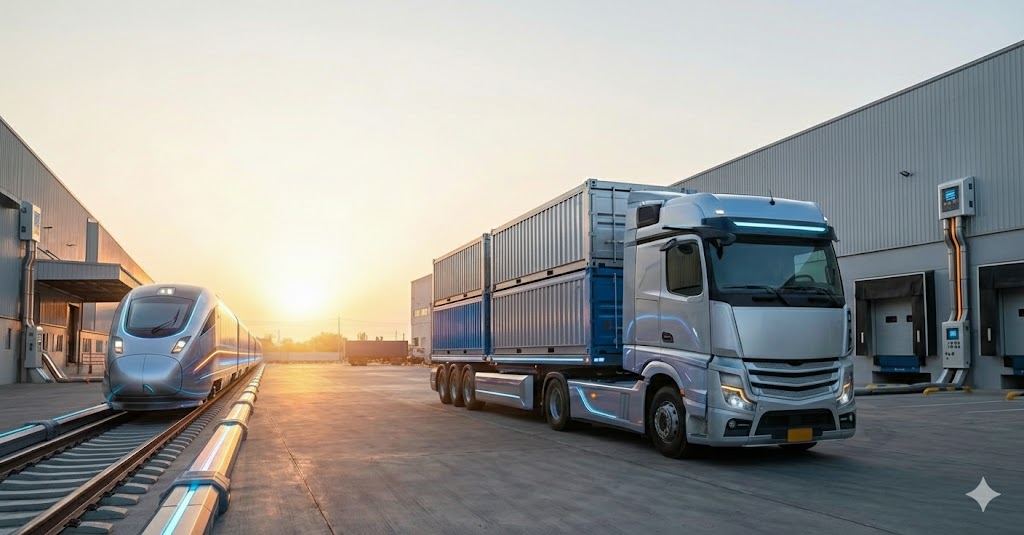
Australia has taken a major step in reshaping its freight future with the release of a revised National Freight and Supply Chain Strategy, supported by a new National Action Plan that sets long-term priorities through the 2030s. The update reflects rapid changes across global supply chains, mounting pressures on domestic infrastructure, and a growing need for cleaner, more resilient freight networks.
The new strategy, highlighted by the International Railway Journal, underscores the government’s commitment to modernising Australia’s transport corridors while preparing for population growth, shifting trade patterns, and climate challenges.
A Strategy Built for Efficiency, Resilience, and Sustainability
The updated plan centres on four national priorities designed to elevate Australia’s freight performance:
1. Improving Productivity Across All Modes
The government aims to streamline the movement of goods across road, rail, sea, and air. This includes reducing bottlenecks, improving multimodal connections, and boosting the performance of key freight corridors.
Enhanced productivity is expected to drive down costs for businesses and strengthen Australia’s competitiveness in global markets.
2. Building a Resilient Supply Chain Network
Recent years have exposed vulnerabilities across Australian freight, from floods and bushfires to port disruptions and global shipping volatility.
The revised strategy puts resilience at the forefront, encouraging better planning, stronger infrastructure, and contingency measures to safeguard essential supply chains.
3. Accelerating Decarbonisation of the Freight Sector
With transport accounting for a significant portion of national emissions, industry decarbonisation is now a major focus.
The plan supports investment in cleaner technologies such as electric heavy vehicles, low-emissions rail solutions, greener port operations, and improved energy efficiency across logistics.
4. Enhancing Data-Driven Logistics
The government will expand digital tools and freight data platforms to improve network visibility.
Better data means better decision-making, enabling operators, shippers, ports, and rail providers to optimise planning, predict disruptions, and coordinate more efficiently.
A Renewed Push Toward Rail Freight
A standout feature of the new strategy is a strong push to increase the share of freight moved by rail.
Rail offers major long-term advantages, including reduced emissions, lower cost per tonne-kilometre, and improved safety when compared with long-distance road transport.
With several major infrastructure projects underway, including Inland Rail, intermodal terminal expansions, and port-rail upgrades, Australia is positioning rail as a core pillar of its future freight network.
Industry groups, including the Australasian Railway Association, have welcomed the renewed focus on rail, noting its importance in supporting a low-carbon, high-capacity, and future-proof transport system.
What This Means for the Freight Industry
For freight operators and supply-chain businesses, the updated strategy signals:
- More investment opportunities in rail-connected logistics
- Greater incentives for cleaner transport technology adoption
- A more coordinated national framework for handling disruptions
- A long-term roadmap that favours multimodal efficiency over road-only solutions
Freight companies that embrace digital optimisation, intermodal capability, and sustainability stand to benefit the most.
Genfreight’s Take
At Genfreight, we welcome the federal government’s renewed focus on creating a safer, cleaner, and more resilient freight ecosystem.
The freight landscape is changing fast, and strategies like this help ensure Australian businesses are equipped to compete and thrive in the decade ahead.
As the national framework evolves, Genfreight will continue delivering efficient, compliant, and forward-thinking logistics solutions that support Australia’s growing freight needs.