
Introduction
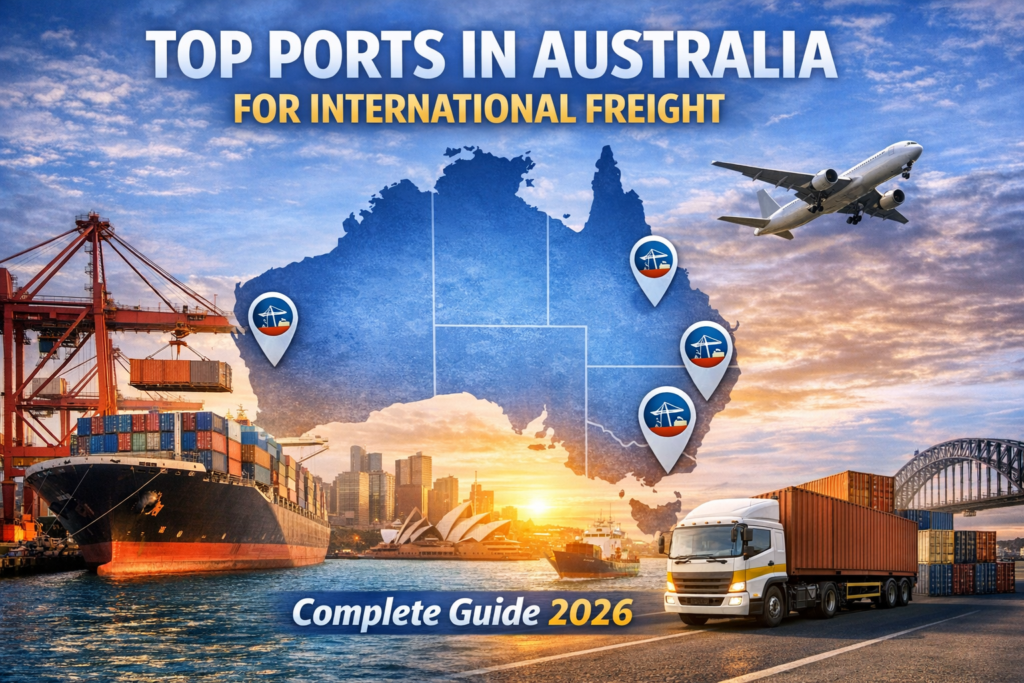
Australia’s global trade relies heavily on its major ports, which handle millions of tonnes of cargo every year. Whether you’re importing goods from Asia or exporting commodities worldwide, choosing the right port can significantly impact cost, transit time, and efficiency.
In this guide, we explore the top ports in Australia for international freight, what makes them important, and how to choose the best one for your business.
Why Choosing the Right Port Matters
Selecting the right port isn’t just about location — it affects:
- Shipping costs and transit times
- Customs clearance efficiency
- Inland transport logistics
- Congestion and delays
- Availability of freight services
Working with an experienced freight forwarder like GenFreight ensures you optimise port selection based on your cargo and supply chain needs.
Top 5 Ports in Australia for International Freight
1. Port of Melbourne (Victoria)
The Port of Melbourne is Australia’s largest and busiest container port, handling over one-third of the nation’s container trade.
Key Features:
- Handles ~3 million TEU annually
- Strong connections to road and rail networks
- Ideal for retail, consumer goods, and manufactured imports
Best For:
- Importers shipping from China and Southeast Asia
- Businesses distributing across southern Australia
2. Port Botany (New South Wales)
Located in Sydney, the Port Botany is a major hub for containerised freight.
Key Features:
- Advanced container handling facilities
- Close proximity to Sydney’s business districts
- High-frequency shipping routes
Best For:
- High-volume imports
- E-commerce and retail distribution
3. Port of Brisbane (Queensland)
The Port of Brisbane is one of Australia’s fastest-growing ports and a key gateway to Queensland.
Key Features:
- Deep-water port with modern infrastructure
- Lower congestion compared to southern ports
- Strong export capabilities
Best For:
- Agricultural exports
- Importers servicing Queensland markets
4. Port of Fremantle (Western Australia)
The Port of Fremantle is the main gateway for Western Australia’s container trade.
Key Features:
- Strategic location for Indian Ocean trade routes
- Efficient handling of containerised cargo
- Strong mining and industrial connections
Best For:
- Imports from India, Middle East, and Africa
- Western Australia distribution
5. Port of Adelaide (South Australia)
The Port of Adelaide plays a crucial role in South Australia’s import and export activities.
Key Features:
- Less congested than larger ports
- Efficient turnaround times
- Strong automotive and wine export sectors
Best For:
- Businesses needing faster clearance
- South Australian supply chains
Key Factors When Choosing an Australian Port
When selecting a port for your shipments, consider:
1. Cargo Type
Different ports specialise in different cargo types (containers, bulk, breakbulk).
2. Final Delivery Location
Choose the port closest to your warehouse or customer base to reduce inland transport costs.
3. Shipping Routes
Some ports have more frequent sailings from key trade lanes like China–Australia routes.
4. Port Congestion
Major ports can experience delays during peak seasons.
How GenFreight Can Help
At GenFreight, we help businesses:
- Choose the most efficient Australian port
- Manage customs clearance and documentation
- Optimise shipping routes and costs
- Coordinate end-to-end logistics
Whether you’re importing or exporting, our expert team ensures smooth and cost-effective freight solutions.
👉 Explore our full guide on
Shipping from China to Australia:
https://genfreight.com.au/shipping-from-china-to-australia-complete-freight-guide-for-importers-2026
Final Thoughts
Australia’s major ports each offer unique advantages depending on your business needs. From the high-capacity Port of Melbourne to the strategically located Port of Fremantle, selecting the right gateway can significantly improve your supply chain efficiency.
Partnering with a trusted freight forwarder like GenFreight ensures you make the best decision for your logistics operations.