
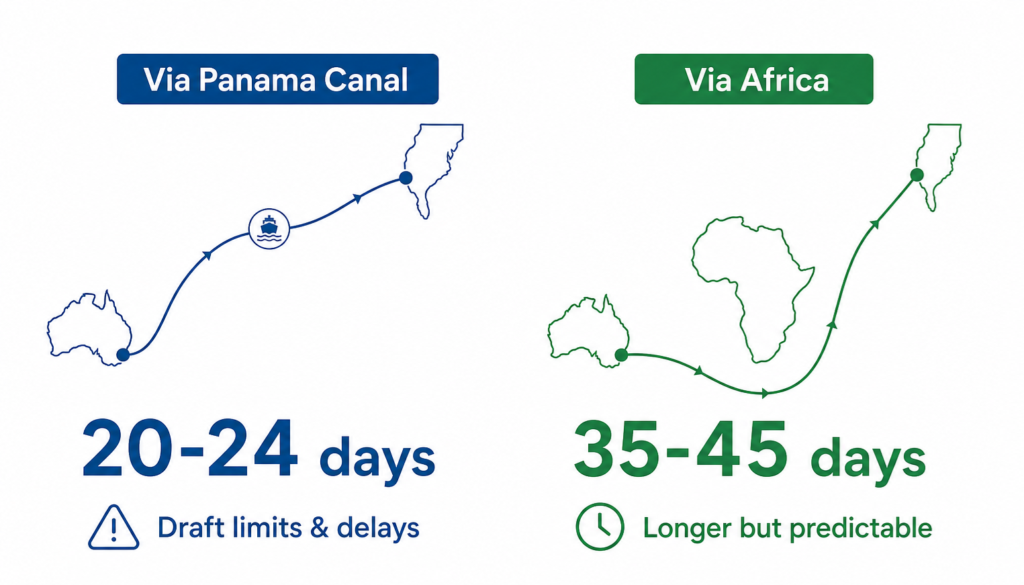
El Niño is intensifying across the tropical Pacific, with US forecasters now assigning >90% odds of a very strong event this fall and winter. For Australian businesses importing from the US East and Gulf coasts, the Caribbean, and parts of Latin America, that translates into tighter Panama Canal capacity, longer transits, and higher risk of cost and schedule volatility.
Why the Panama Canal matters for Australian trade
Unlike Suez, the Panama Canal is freshwater-dependent. Each transit consumes around 200 million litres from Gatún and Alajuela lakes to operate the gravity-fed locks.
El Niño weakens the rain-bearing winds over Central America, so reservoir inflows drop. When water levels fall, the Canal Authority must conserve water by cutting daily transits and limiting vessel draft.
The Panama Canal Authority has reversed its earlier “no limits in 2026” stance and is phasing in restrictions.
Daily transits:
From 3 September: 36 → 34 vessels/day
From 15 September: down to 32 vessels/day
Neopanamax locks: capped at 9 slots/day from 3 September.
Panamax locks: initially 25 slots/day, then 23 from 15 September.
Draft limits (Neopanamax):
From 2 September: max 14.63 m (48 ft)
From 1 October: max 14.48 m (47.5 ft)
Rainfall since May has been 34% below average, with basin inflows down 44%, so further tightening remains possible if El Niño deepens.
A tanker recently paid a record USD5.3 million for a priority transit slot as shippers race to secure passage ahead of tighter limits.
Vessels without reservations are facing wait times up to 11 days, according to recent market reports.
For Australian trades, this means:
* +15–21 days transit time if services reroute via Africa or Suez instead of Panama.
* Higher ocean rates and surcharges (several lines have already flagged or adjusted low-water/draft-related surcharges).
* Increased schedule unreliability and potential for last-minute rollovers or reroutes.