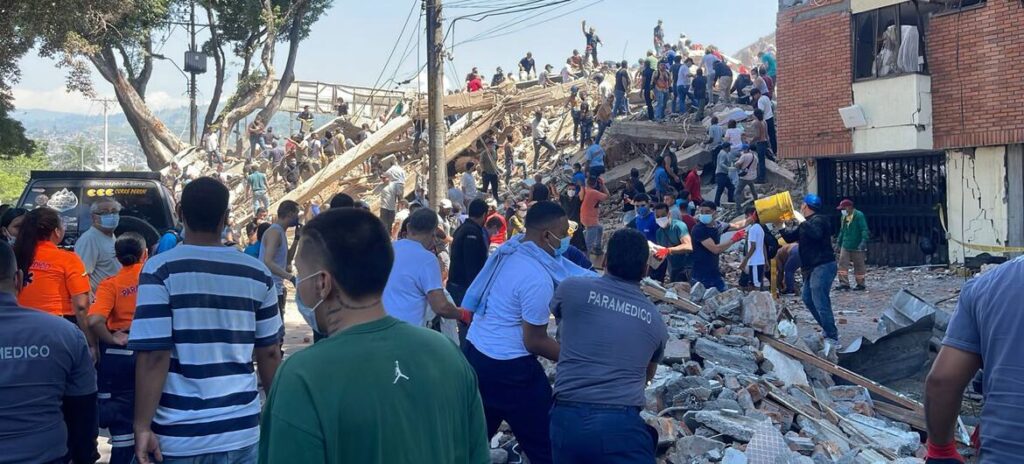
On the 10th August, a magnitude 7.4 earthquake struck western Colombia, with its epicentre near San José del Palmar in Chocó department, roughly 100km deep and just inland from Valle del Cauca. It is the largest seismic event Colombia has recorded this century.
More than a week later, the ripple effects are still moving through global trade lanes.
The scale of this disaster goes well beyond port disruption. Colombian authorities have confirmed over 250 deaths, with thousands more injured and hundreds still reported missing.
Infrastructure damage has been severe and geographically dispersed. Six airports, including Buenaventura’s, were closed for safety inspections, and at least eight separate landslides blocked the single main road corridor linking Buenaventura to the interior, effectively cutting the port’s only inland connection for several days.
Buenaventura is Colombia’s principal Pacific gateway, handling the majority of the country’s container traffic along with major volumes of coffee, sugar, coal, and paper/pulp exports. Colombia is the world’s third-largest coffee producer, and Buenaventura is the primary export outlet for that trade.
APM Terminals’ TCBUEN S.A. published the below in notices on August 14 (Notice 670–671): Vessel operations resumed with the arrival of the Maersk Halsted, marking the first ship worked since the quake. Export container deliveries reopened on a limited daily allocation. By this point the terminal reported 45.7% operating capacity and 72% yard occupancy, with import appointment slots expanding but empty-return appointments still suspended.
The response across the industry has been fairly uniform in substance, even if the wording varies: suspend Buenaventura calls or operations, reroute where feasible, and hold off on committing to a restoration date until safety assessments are complete.
Some exporters have already begun redirecting cargo to Colombia’s Caribbean-side ports as a workaround, though the country’s limited freight transport capacity means this isn’t a frictionless substitution, it simply shifts the bottleneck rather than removing it.
For cargo routed through Buenaventura, a few practical takeaways stand out:
* Export bookings should expect continued delays even after nominal reopening, given the inventory backlog built up during the closure.
* Regional freight and inland trucking rates into and out of Colombia’s Pacific coast are trending higher, and that pressure is likely to persist while the La Línea and Buenaventura–Buga corridors remain constrained.
* Customs relief measures (transit deadline extensions, and a broader draft decree covering several affected cities) offer some breathing room, but only where formally confirmed and applied.
📸 Valentina Escobar Salazar https://news.un.org/en/story/2026/08/1168112