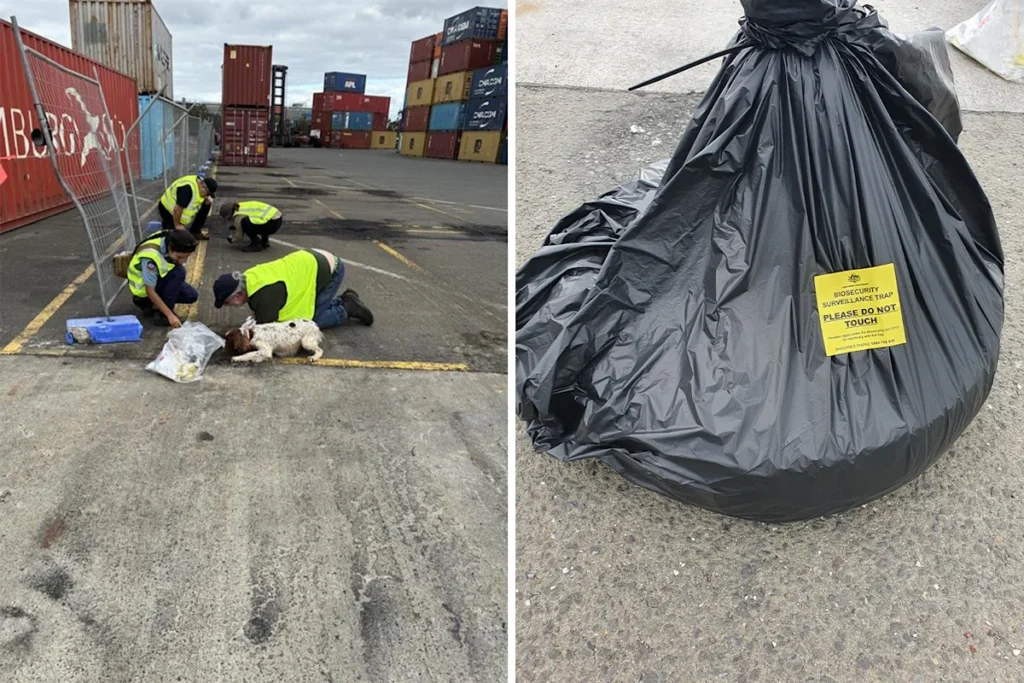
🐜 𝗙𝗶𝗿𝗲 𝗔𝗻𝘁 𝗗𝗲𝘁𝗲𝗰𝘁𝗶𝗼𝗻 𝗮𝘁 𝗮 𝗦𝘆𝗱𝗻𝗲𝘆 𝗟𝗼𝗴𝗶𝘀𝘁𝗶𝗰𝘀 𝗛𝘂𝗯 🐜
A nest of red imported fire ants has been detected at the Enfield Intermodal Logistics Centre in Sydney’s inner west, prompting a coordinated response from NSW authorities, Department of Agriculture, Fisheries and Forestry (DAFF), Department of Primary Industries & Regional Development (DPIRD) and the National Fire Ant Program.
The nest was found near the corner of a shipping container during routine surveillance. DNA testing suggests the ants were not connected to the established Southeast Queensland population, with authorities believing they may have arrived in an international shipping container.
Red imported fire ants are regarded as one of the world’s most invasive pest species. They can damage infrastructure, harm people and animals, disrupt outdoor operations, and create significant costs if they become established.
This incident is a reminder that biosecurity risk does not stop at the port gate. Containers, machinery, soil, turf, packaging and vehicles can all present pathways for pests to move beyond controlled environments.
Authorities were first notified on 25th September after DAFF officers detected the ants in a trap during a routine inspection. The nest was confirmed and treated, with specialist crews and detection dogs deployed to the site.
The immediate surveillance zone is focused within 500 metres of the logistics centre, with plans to extend searches to a 2 kilometre radius. A Biosecurity Control Order has also been issued to manage the movement of high-risk materials in and out of the area.
No further nests have been found at this stage.
Australia’s freight system depends on fast, reliable movement of goods, but that system also depends on strong biosecurity controls. Early detection, rapid reporting and coordinated containment are critical to preventing an isolated incursion from becoming an established problem.
If you suspect fire ants, authorities advise, leave it, snap it, call it. Do not disturb the nest; take a clear photo or video and report it via the helpline on 1800 680 244 or through the online reporting form.
📸 and reference DPIRD