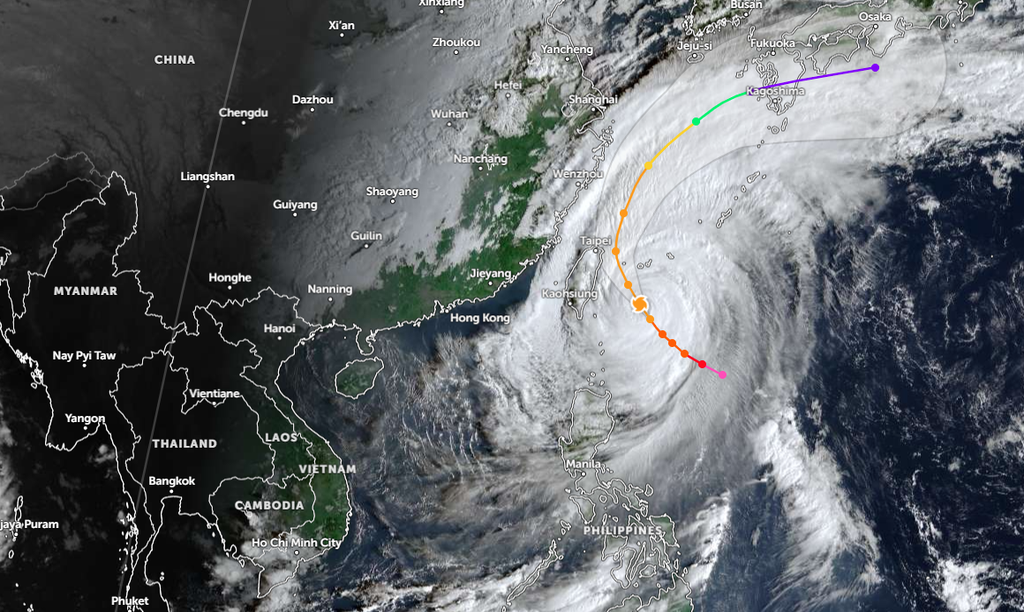
🌧️ 𝗧𝘆𝗽𝗵𝗼𝗼𝗻 𝗖𝗵𝗮𝗺𝗽𝗶 🌧️
Importers and exporters moving cargo through Taiwan and East China should prepare for port restrictions, possible temporary closures and changes to shipping schedules as Typhoon Champi moves through the region.
Taiwan is expected to experience its strongest effects on 23rd and 24th of October, with the storm then tracking north towards waters off Shanghai.
P̲o̲r̲t̲ ̲c̲l̲o̲s̲u̲r̲e̲s̲ ̲a̲n̲d̲ ̲r̲e̲s̲t̲r̲i̲c̲t̲i̲o̲n̲s̲:̲
The situation varies between ports, shipping channels and individual terminals.
𝘊𝘩𝘢𝘯𝘨𝘫𝘪𝘢𝘯𝘨 𝘌𝘴𝘵𝘶𝘢𝘳𝘺 / 𝘚𝘩𝘢𝘯𝘨𝘩𝘢𝘪 𝘳𝘪𝘷𝘦𝘳 𝘢𝘤𝘤𝘦𝘴𝘴
A port-agency advisory reports pilotage suspended from 21st October, with restrictions on inbound river-port traffic. Further restrictions on vessels sailing from river ports towards the estuary were scheduled from 08:00 local time on 23rd October. Resumption is forecast for 26th October, subject to conditions.
𝘕𝘪𝘯𝘨𝘣𝘰, 𝘡𝘩𝘰𝘶𝘴𝘩𝘢𝘯, 𝘞𝘦𝘯𝘻𝘩𝘰𝘶, 𝘛𝘢𝘪𝘻𝘩𝘰𝘶 𝘢𝘯𝘥 𝘟𝘪𝘢𝘮𝘦𝘯
Port-agency forecasts flagged closures from 22nd October. However, an update confirmed Ningbo, Yangshan and Waigaoqiao terminals remained fully operational. These locations should therefore be treated as disruption risks, not blanket confirmed closures.
𝘍𝘶𝘫𝘪𝘢𝘯
Restrictions are already affecting vessel movements. Ports are refusing large vessels and dangerous-goods carriers, while towing operations, sea trials and offshore construction have been suspended.
𝘛𝘢𝘪𝘸𝘢𝘯 𝘚𝘵𝘳𝘢𝘪𝘵
Authorities in mainland China and Taiwan have introduced maritime restrictions, with vessels adjusting routes around the approaching storm.
Closure and reopening times remain subject to local conditions and port-authority instructions.
A̲i̲r̲f̲r̲e̲i̲gh̲t̲
Taiwan’s transport ministry reported all 262 domestic flights and more than 350 international flights cancelled on 23rd October. Although these figures are not cargo-flight cancellation totals, they highlight the scale of aviation disruption and the potential effect on passenger-flight cargo capacity and connections.
Urgent airfreight consignments may require revised routings, alternative flights or additional transit time.
Reopening a port does not immediately restore normal schedules. Congestion and berthing delays are expected as vessels return and terminals work through accumulated cargo.
For shippers, the risks include…
• Revised vessel departures and arrival dates
• Delayed berthing and cargo availability
• Missed connections and changes to planned routings
• Reduced flexibility for time-critical deliveries
Check terminal receiving arrangements, cargo cut-offs and revised carrier schedules before dispatching cargo. Where delivery dates are critical, review alternatives early and allow contingency time.
A storm weakening does not mean its operational impact has ended. The immediate concern is safe port and vessel operations; the next is the backlog left behind.