
When you think about global shipping, your mind probably jumps to logistics, tariffs, and market demand. However, for businesses involved in importing to or exporting from the country, there’s another, often underestimated, factor that can make or break your operations: biosecurity in Australia. It’s far more than just a bureaucratic hurdle; it’s a critical national safeguard with significant implications for your bottom line.
What Exactly is Biosecurity?
Put simply, biosecurity is the strategic set of measures designed to prevent the introduction and establishment of harmful pests, diseases, and weeds. It also aims to stop their spread if they do occur. Its overarching goal is to protect a country’s economy, its environment, and indeed, its human health. In the context of global trade, it encompasses everything from stringent border controls to surveillance programs and rapid response mechanisms. Essentially, it’s Australia’s first line of defence against unwanted biological invaders.
Why is Biosecurity Indispensable for Australia?
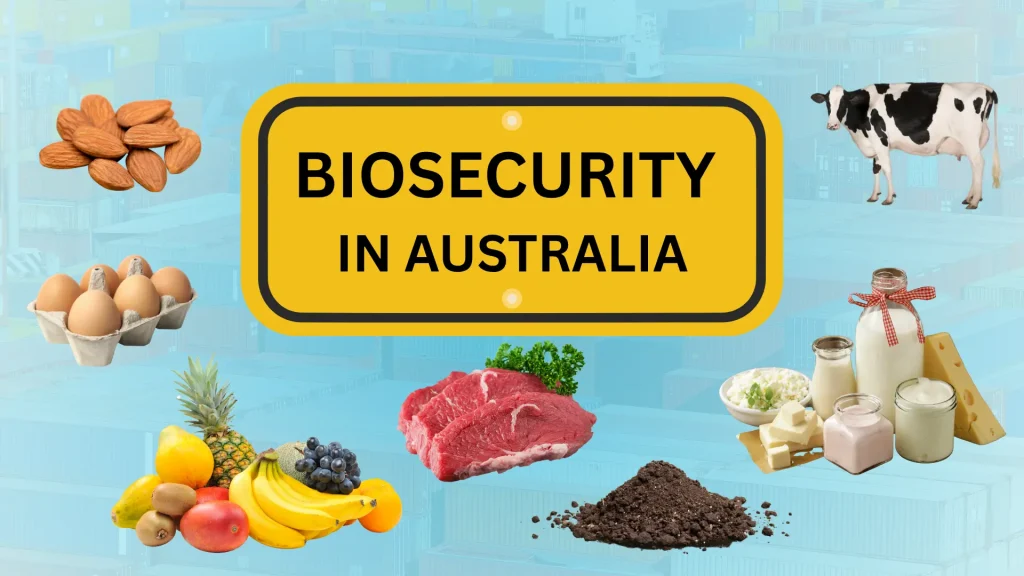
Australia’s unique island ecology, isolated for millions of years, has fostered an incredibly diverse array of native flora and fauna. Consequently, our ecosystems are highly vulnerable to exotic pests and diseases. These threats can rapidly devastate native species and agricultural industries alike. Furthermore, Australia’s economy is heavily reliant on its agriculture and food sectors, which proudly uphold a “clean and green” reputation in international markets. Maintaining this status isn’t just about branding; it’s fundamental to preserving market access and the trust of global consumers. In fact, invasive species already cost Australia an estimated $25 billion annually in agricultural losses and management costs, underscoring the immense value of prevention.
The Outlook: Updates and Increased Scrutiny
As we move through 2025, the landscape of Australian biosecurity continues to evolve. Global trade volumes are escalating, new environmental challenges are emerging, and consequently, biosecurity measures are being continually refined and strengthened. This year brings specific updates, including changes to biosecurity and imported food regulatory charges that came into effect on July 1, 2025. Alongside significant reforms to Illegal Logging Prohibition laws that commenced in March 2025. Additionally, the integration of imported food safety requirements directly into the BICON system (Biosecurity Import Conditions system) as of June 15, 2025, represents a major step towards streamlining compliance, but also demands your immediate attention.
This article will serve as your essential guide, providing a comprehensive, up-to-date roadmap to understanding Australia’s biosecurity system in 2025. You’ll gain valuable insights into the latest threats, understand the specific requirements that impact your shipments, and learn about crucial updates designed to protect both Australia and your business interests. Ultimately, our aim is to equip you with the knowledge needed to navigate this vital aspect of international trade with confidence and compliance.
The Foundations of Protection: Australia's Biosecurity System Explained
Delving deeper, understanding what biosecurity in Australia truly entails means grasping the sophisticated, multi-layered system designed to safeguard the nation. This isn’t just a haphazard collection of rules. Conversely, it’s a meticulously planned and executed strategy involving various government bodies, industry stakeholders, and the broader community.
What is Biosecurity in Australia?
At its core, Australia’s biosecurity system is a comprehensive framework managed primarily by the Department of Agriculture, Fisheries and Forestry (DAFF). This crucial federal department works tirelessly to protect Australia’s animal and plant health, agricultural industries, and natural environment from exotic pests and diseases. Additionally, other key agencies like the Department of Health also play a vital role, particularly concerning human biosecurity risks. The system functions on a “biosecurity continuum”, which involves a strategic, layered approach extending across the globe and within Australia itself.
A Layered Approach to Protection: From Pre-Border to Post-Border (and Beyond for Exports)
Australia’s biosecurity efforts are strategically divided into three interconnected layers, each designed to manage risks at different stages:
• Pre-Border (Offshore Verification & International Agreements)
This initial layer focuses on preventing risks from even reaching Australian shores. It involves extensive intelligence gathering on global pest and disease outbreaks and rigorous risk analysis of imported goods and pathways. Additionally, it relies on crucial international collaboration. DAFF biosecurity officers work overseas, often in exporting countries, to verify compliance with Australian import conditions before goods even embark. Furthermore, Australia actively participates in global forums and international agreements. So this involvement helps shape worldwide biosecurity standards to minimise risks at their source.
• At-the-Border (Inspections, Treatments & Clearances)
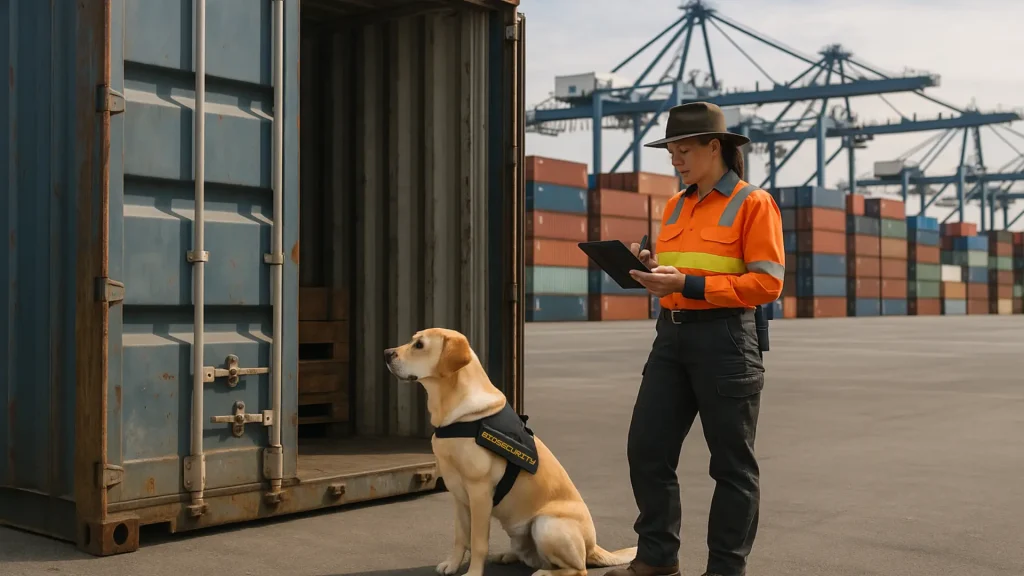
As goods, vessels, and people arrive, they encounter Australia’s stringent border controls. This is where physical inspections, X-ray screening, and the vigilant work of detector dog teams come into play. For instance, high-risk goods may require mandatory treatments like fumigation or heat treatment. These measures aim to eliminate potential pests or pathogens before the goods are cleared for entry. These measures are pivotal in intercepting threats that might have bypassed pre-border controls.
• Post-Border (Surveillance, Emergency Responses & Partnerships)
Even after goods have entered the country, the biosecurity vigilance continues. This layer involves ongoing surveillance programs across Australia’s agricultural regions and natural landscapes to detect new pest and disease incursions early. Should an outbreak occur, rapid emergency response protocols are activated to contain and, where possible, eradicate the threat. Moreover, strong partnerships with state and territory governments, industry groups, and local communities are essential for effective post-border management and intelligence gathering.
Beyond these three layers, for exporters, Australia’s biosecurity system also extends to ensuring export readiness. This involves meticulous preparation and certification of goods leaving Australia to meet the importing country’s unique biosecurity standards. Consequently, maintaining a high level of national biosecurity directly supports Australia’s reputation as a reliable and safe trading partner.
The Legislative Cornerstone: Biosecurity Act 2015 and Export Control Act 2020
The backbone of Australia’s modern biosecurity framework is the Biosecurity Act 2015. This landmark legislation, which commenced in June 2016, replaced the century-old Quarantine Act 1908. Why the change? The old Act, while foundational, was seen as increasingly outdated and inflexible. It struggled to keep pace with modern trade volumes, new technologies, and evolving biosecurity threats. The The Biosecurity Act 2015, by contrast, is designed to be more adaptive, risk-based, and user-friendly. Also it provides stronger enforcement powers and clearer responsibilities for all involved.
For businesses engaged in export, it’s also vital to be aware of the Export Control Act 2020. This legislation provides the framework for the Australian Government to regulate goods exported from Australia. So it ensures these goods meet the importing country’s requirements. This often includes specific biosecurity-related conditions, further cementing Australia’s “clean and green” reputation on the global stage.
Shared Responsibility
Ultimately, the effectiveness of Australia’s biosecurity system hinges on a fundamental principle: shared responsibility. While DAFF and other government agencies lead the charge, the system only works effectively when everyone plays their part. This extends from international trading partners and shipping companies to importers, exporters, logistics providers, and even individual travellers and consumers. So every entity in the supply chain has a role in preventing biosecurity risks. Consequently, understanding your obligations and actively contributing to biosecurity measures is not just a legal requirement. It’s a shared commitment to protecting Australia’s future and ensuring the continuity of your own business operations.
Biosecurity in Australia: Current Threats
Despite Australia’s robust biosecurity framework, the sheer volume of global trade means that the nation constantly faces a dynamic array of threats. Consequently, for businesses engaged in import or export, understanding these current dangersis vital for informed decision-making and proactive risk management. In 2025, specific pests and diseases, moreover, remain high on DAFF’s watch list, demanding vigilance from every point in the supply chain.
Persistent Pests: Tiny Invaders with Massive Impacts
Among the most insidious biosecurity threats are invasive insects and plant pests, capable of causing widespread agricultural and environmental damage.
• Khapra Beetle (Trogoderma granarium)
This destructive pest is arguably Australia’s number one plant biosecurity threat. It can, furthermore, infest a wide range of stored products, including grains, nuts, and dried foods. As a result, this can cause significant economic losses to the grains industry. Alarmingly, it’s incredibly hardy, difficult to detect. Also it can survive for long periods without food, even in cracks and crevices of containers.
2025 Update: From May 28, 2025, DAFF introduced new rules for pre-export treatment and phytosanitary certificates for high-risk plant products and sea containers affected by khapra beetle regulations. These changes also highlight the need to strictly follow updated methyl bromide fumigation methods, effective from May 1, 2025. Additionally, businesses must provide detailed certificates to meet the new requirements. This includes new sealing declarations to confirm where goods were packed and when treatments were done within 21 days before export. To learn more about Kharpa Beetle read our article ‘Khapra Beetle: What Australian Importers Need to Know’.
• Brown Marmorated Stink Bug (BMSB - Halyomorpha halys)
Known for its ability to hitchhike in cargo and vehicles, the BMSB poses a significant threat to horticulture and agriculture. It feeds on over 300 plant species and can aggregate in large numbers, potentially causing immense crop damage.
2025-26 Season Has Commenced & Heightened Vigilance Required: The official BMSB risk season is now underway for 2025-26. Heightened biosecurity measures apply to target high-risk and target-risk goods manufactured in or shipped from target risk countries from 1 September 2025, and that will be shipped to arrive in Australian territory by 30 April 2026. Importers must ensure all mandatory offshore treatments are completed to avoid costly delays. While these seasonal measures are in place, importers are reminded it remains their responsibility to ensure goods are free of biosecurity risk material year-round. DAFF continues to maintain heightened vessel surveillance, particularly for Roll-on/Roll-off (RoRo) vessels. To gain a deeper understanding of BMSB risks and how to prepare your shipments effectively, read our detailed guide: ‘Brown Marmorated Stink Bug (BMSB) Season 2025-26’.
Devastating Diseases: A Constant Watch for Animal & Plant Health
Beyond pests, a range of highly contagious animal and plant diseases pose an existential threat to Australia’s agricultural industries and food security. For example:
- Foot-and-Mouth Disease (FMD): Australia has maintained its FMD-free status for over 150 years. However, outbreaks in nearby regions, particularly Indonesia, serve as a constant reminder of this highly contagious viral disease. It can have catastrophic economic consequences for cloven-hoofed animals. An incursion could, moreover, immediately halt Australia’s $30 billion livestock export industry. Consequently, businesses must understand that certain imported animal products pose a direct pathway for FMD. Therefore, extreme caution is necessary in handling such goods.
- African Swine Fever (ASF): While absent from Australia, ASF continues to devastate pig populations across Asia and parts of Europe, including our near region. There is, furthermore, currently no vaccine or cure for this highly fatal viral disease. DAFF maintains strict controls on pork and pork products, especially in commercial mail and cargo. This is because the virus can survive for long periods in uncooked or cured meat. Businesses handling any pork products must be acutely aware of this threat, as non-compliance carries severe risks.
- Lumpy Skin Disease (LSD): This viral disease, affecting cattle and water buffalo, has rapidly spread across Asia and entered Indonesia. While it doesn’t affect humans, it causes severe economic losses and trade impacts due to reduced production. Given its proximity, Northern Australia is considered the most likely entry point for LSD. Businesses involved in importing or exporting live animals, genetic material, or even certain animal products must understand and comply with strict biosecurity measures related to this disease.
Persistent Weeds: Silent Spreaders
Beyond pests and diseases, invasive weeds can outcompete native plants, degrade ecosystems, and reduce agricultural productivity. For instance:
- Red Imported Fire Ant (Solenopsis invicta): These aggressive ants pose a significant threat to public health. Moreover, they could cause immense damage to agriculture, infrastructure, and native wildlife. Additionally, they are notoriously difficult to eradicate once established. Recent detections in NSW (e.g., Tweed Heads in early July 2025) highlight the ongoing challenges of their spread, often via contaminated soil, mulch, or landscaping materials. Businesses, consequently, dealing with such carrier materials must strictly follow movement controls within and from biosecurity zones. This helps prevent the inadvertent spread of this devastating pest.
Common Pathways of Entry: Where Your Vigilance Matters Most
Understanding these threats is crucial. However, equally important is recognising how they can enter Australia, directly impacting your global logistics operations. For businesses, the primary pathways include:
- Cargo (Sea Containers & Air Freight): This is arguably the highest-risk pathway due to the sheer volume and diversity of goods. Pests like BMSB and Khapra beetle are notorious hitchhikers in containers and goods. Furthermore, contaminated packaging (e.g., untreated timber pallets) can introduce wood-boring insects or plant diseases.
- Mail: Small parcels can, inadvertently, carry undeclared biosecurity risks such as plant seeds, animal products, or insects, often unbeknownst to senders.
- Passenger Movements: While this article focuses on commercial freight, it’s important to note that international travellers can also carry biosecurity risk material through baggage or personal items. This underscores the broader shared responsibility across all entry points.
The Cost of Vigilance: Why Australian Biosecurity is So Strict
As a business navigating international trade, you might sometimes perceive Australia’s biosecurity regulations as incredibly stringent, perhaps even a hindrance. However, understanding the underlying reasons — and the very real costs involved — transforms this perception. Ultimately, these strict measures aren’t arbitrary. Conversely, they are a vital investment in protecting the very economic landscape and market access we all rely upon.
The True Cost of Inaction: Billions at Stake
When we talk about biosecurity, it’s easy to focus on the immediate costs of compliance. However, the potential economic cost of failed biosecurity is astronomical. We are discussing not just “insect biosecurity,” but the comprehensive prevention of all invasive pests, weeds, and diseases. Indeed, the latest estimates indicate that these invasive species already cost the Australian economy approximately $25 billion annually. This staggering figure encompasses agricultural losses, environmental damage, and ongoing management efforts.
Consider the potential impact of a single major incursion:
- A widespread Foot-and-Mouth Disease (FMD) outbreak, for instance, could devastate Australia’s livestock industries, with direct economic impacts potentially soaring to $80 billion over 10 years.
- Similarly, if the Khapra beetle were to become established, it could cost our economy $15.5 billion over 20 years, directly impacting grain and stored product exports.
These figures aren’t just statistics. Conversely, they represent a very real threat to the industries that form the backbone of Australia’s export capability. Preventing these incursions, therefore, is far more cost-effective than attempting to eradicate them.
The Immediate Costs of Non-Compliance for Your Business
Beyond the national economic impact, non-compliance with biosecurity regulations carries direct, significant, and immediate financial penalties for your business. These aren’t minor inconveniences. Conversely, they can severely disrupt your supply chain and erode your profitability. You could face:
- Significant Fines: Firstly, the Biosecurity Act 2015 includes substantial penalties for breaches. For instance, severe contraventions can result in fines of hundreds of thousands, or even millions, of dollars for corporations.
- Re-exportation Costs: Secondly, if your goods are deemed a biosecurity risk, you may be required to re-export them. As a result, this can lead to considerable freight and logistical expenses.
- Destruction of Goods: Thirdly, in some cases, high-risk items may be ordered to be destroyed, resulting in total loss of your cargo and investment.
- Reputational Damage: Additionally, non-compliance can damage your business’s reputation with both Australian authorities and international partners. This may affect future trade opportunities.
- Supply Chain Disruptions: Lastly, delays due to inspections, treatments, or non-compliance can throw your entire logistics schedule into disarray. A s a result this could affect client relationships and further increasing costs.
Crucial 2025 Update:
It’s vital to note that as of July 1, 2025, DAFF implemented changes to biosecurity and imported food regulatory charges. Most legislated regulatory charges have increased by 2.4% due to indexation. Moreover, a new one-off charge has commenced for businesses holding Approved Arrangement and Compliance Agreement statuses. Therefore, reviewing the updated 2025-26 Biosecurity Cost Recovery Implementation Statement (CRIS) and pricing tables is essential to accurately forecast your operational costs.
The Deeper Reasons: Why Australia Can't Afford to Be Lenient
So, why the unwavering strictness? It boils down to a confluence of unique factors that make Australia particularly vulnerable and reliant on robust biosecurity:
- Unique Biodiversity. Firstly, Australia’s long geographical isolation has led to the evolution of incredibly unique plant and animal species found nowhere else on Earth. These native ecosystems are incredibly fragile and lack natural defenses against exotic pests and diseases. So this make them highly susceptible to even minor incursions.
- Economic Reliance. Secondly, our economy thrives on the success of industries directly exposed to biosecurity risks. The agriculture sector, valued at over $75.6 billion in exports for 2023-2024, along with the $50 billion tourism sector, are direct beneficiaries of Australia’s pest and disease-free status. Any significant biosecurity breach could, consequently, cripple these vital industries and the millions of jobs they support.
- Historical Lessons. Thirdly, Australia has learned from costly past mistakes. The rabbit plague and the spread of cane toads are clear reminders of how introduced species can harm ecosystems. Without proper control, they can also severely impact agricultural productivity. These lessons have undeniably shaped the current stringent policies.
- International Market Access. Finally, Australia’s “pest and disease-free” status isn’t just a point of national pride. Moreover, it’s a non-negotiable prerequisite for our agricultural and food exports to many international markets. Many countries impose strict import conditions that demand proof of Australia’s biosecurity integrity. Therefore, maintaining this reputation is paramount to securing and expanding our global trade relationships.
From a business perspective, Australia’s strict biosecurity isn’t about creating obstacles. Conversely, it’s about safeguarding the very foundations of successful, sustainable trade. Compliance, therefore, isn’t just a regulation—it’s a shared investment in a prosperous future.
Biosecurity in Australia: Principles, Laws & Requirements
What are the Guiding Principles of Australia's Biosecurity?
Australia’s biosecurity framework operates on core principles that directly influence how your shipments are assessed and processed. Understanding these helps clarify the “why” behind the rules you encounter:
- Risk-Based Approach: Primarily, controls are scientifically tailored to the level of risk a shipment poses based on its origin and contents. Consequently, resources are efficiently allocated, meaning not all imports face the same level of scrutiny.
- Shared Responsibility: This principle is fundamental: effective biosecurity is a shared responsibility. So every part of your supply chain—your overseas supplier, your logistics partner, and your own operations—plays a vital role in preventing risks.
- National Consistency & International Alignment: Furthermore, Australia strives for internal consistency while aligning with international trade standards. This aims to reduce unnecessary trade barriers while upholding robust protections that impact your operational planning.
Australian Biosecurity Requirements
Adhering to Australia’s biosecurity requirements isn’t merely optional; conversely, it’s a legal obligation under the Biosecurity Act 2015. Staying abreast of the latest updates is crucial, especially with recent changes impacting 2025 operations.
• The BICON System: Your Primary Tool for Import Conditions.
The Biosecurity Import Conditions (BICON) system is your indispensable online tool for determining specific import conditions for goods entering Australia. Consequently, thoroughly checking BICON is the very first, non-negotiable step before shipping anything.
Crucial 2025 Update: Significantly, as of June 15, 2025, imported food safety requirements have been fully integrated into the BICON system. This enhancement means BICON now serves as a single, comprehensive source for both biosecurity and food safety conditions for relevant goods. Therefore, it streamlines your research and reduces potential delays.
• Mandatory Documentation: Accuracy is Non-Negotiable
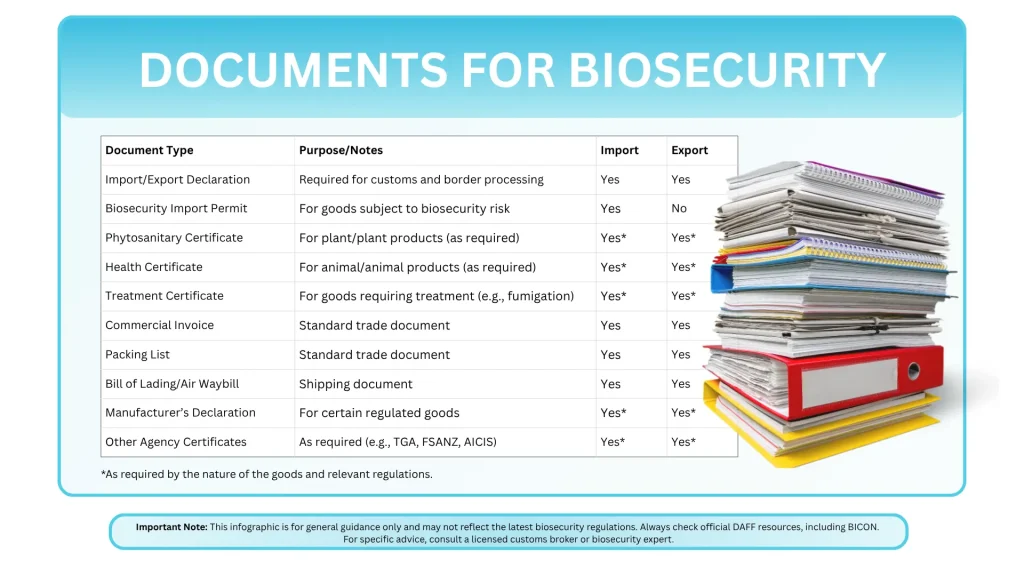
Undoubtedly, accurate and complete documentation is paramount. Any discrepancies can lead to immediate delays, additional inspections, or even re-exportation. Key documents you must meticulously prepare include:
- Commercial Invoice: Detailing the goods, value, and parties involved.
- Packing List: Providing a precise inventory of contents within each package.
- Packing Declaration: Crucially, this document specifies the type of packing materials used. For instance, wood packaging material (e.g., pallets, crates, dunnage) must comply with ISPM 15 standards, ensuring it’s treated and marked to prevent pest movement.
- Health Certificates/Phytosanitary Certificates: Required for many animal, plant, or food products, certifying they meet specific health or plant health standards.
• Inspections & Treatments
Even with perfect documentation, your goods may be subject to inspection and, if necessary, mandatory treatments.
- Common Processes. Firstly, expect physical inspections, X-ray screening, and detector dog inspections upon arrival.
- Mandatory Treatments. Secondly, if a biosecurity risk is identified, or if goods are from a high-risk pathway (like BMSB-affected countries), mandatory treatments may be required. These include fumigation (e.g., with methyl bromide, with specific new documentation requirements, heat treatment, or irradiation.
- Offshore vs. Onshore: Where possible, arranging treatments offshore by DAFF-approved providers before shipment is often more efficient. Conversely, if treatments are performed onshore, they can incur significant additional costs and delays. Therefore, always verify that your offshore treatment providers are on DAFF’s list of registered and approved providers. Suspensions or withdrawals from this list can lead to significant issues for your cargo.
• Approved Arrangements (AAs)
For businesses that regularly import certain goods or carry out specific biosecurity activities on-site, an Approved Arrangement (AA) with DAFF can be highly beneficial. It offers greater flexibility and can streamline biosecurity processes. AAs allow operators to manage biosecurity risks under departmental supervision, potentially leading to quicker clearances and greater operational autonomy.
2025 Update: It’s important to remember that as of July 1, 2025, a new one-off charge has commenced for businesses holding Approved Arrangement and Compliance Agreement statuses. While AAs can streamline operations, this new charge should be factored into your compliance budget.
Conclusion
Strong biosecurity keeps Australia’s “clean and green” image alive, which helps secure market access for our exports around the world. Without it, we risk serious damage to industries, supply chains, and the economy as a whole.
That’s why biosecurity is everyone’s responsibility. Every small action—whether it’s double-checking documents, using approved treatment providers, or staying updated on the latest rules—makes a real difference. The rewards? Smoother trade, fewer delays, avoiding costly fines, and keeping Australia’s trading future secure.
If you have any questions about how biosecurity rules affect your business, or if you need help with freight forwarding, GenFreight Global Logistics is here to help. Reach out to us anytime for expert advice, practical solutions, and professional support—so you can trade with confidence.
Disclaimer:
The information provided in this post is for general guidance and informational purposes only. While every effort has been made to ensure the content is accurate and up to date at the time of publication, regulations and requirements may change without notice. This post does not constitute legal, regulatory, or professional advice. Readers should always seek specific advice tailored to their individual circumstances and consult with relevant authorities or qualified professionals before making decisions related to biosecurity, freight forwarding, or international trade.