
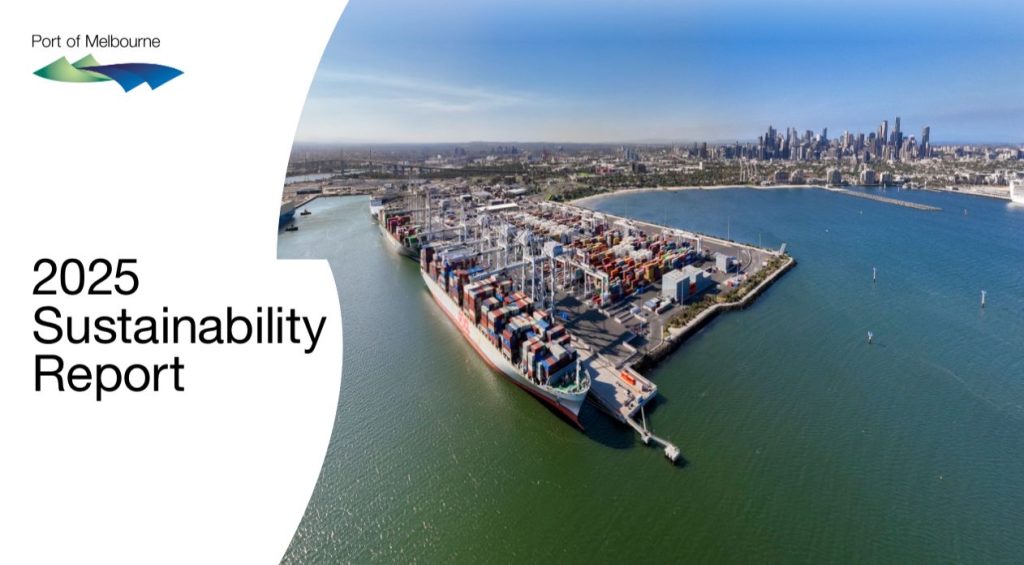
Port of Melbourne’s newly released 2025 Sustainability Report highlights accelerated progress on emissions reduction, resilience, and community outcomes across its four pillars of People, Planet, Partnerships and Prosperity. The report positions the port as a leading, long‑term custodian of Victoria’s trade gateway, with a clear pathway to net zero emissions by 2030 for its own operations.
Strategic sustainability focus
Port of Melbourne frames sustainability as a core business priority that underpins its long‑term competitiveness and licence to operate, rather than as a standalone program. The 2025 report reinforces this by linking sustainability targets to the port’s corporate strategy, capital program and risk management, particularly around climate change and supply chain resilience.
Climate action and net zero
A central feature of the 2025 report is the port’s pathway to achieve net zero Scope 1 and 2 emissions by 2030, supported by interim milestones and clear decarbonisation levers. Key measures include sourcing 100% renewable electricity for its operations, transitioning its vehicle fleet and marine survey vessel to electric or zero‑emissions technologies, and continuing to cut operational emissions after achieving a 43% reduction in FY24.
Environmental stewardship
Beyond carbon, the report outlines a broader “Planet” agenda covering climate resilience, biodiversity, resource efficiency, and management of noise and air quality around the port precinct. This includes strengthening climate‑risk assessments for critical assets, enhancing environmental management systems certified to international standards, and investing in habitat and open space outcomes that support local communities.
People and workplace
Under the “People” pillar, the 2025 report emphasises health, safety, wellbeing and culture, highlighting recognition such as Tier 1 status under the Mental Health First Aid Australia workplace program. The port reports ongoing investment in training, inclusion and engagement initiatives designed to keep its workforce safe, skilled and supported as operations and technologies evolve.
Partnerships and prosperity
The “Partnerships” and “Prosperity” sections showcase how Port of Melbourne works with tenants, shipping lines, government and investors to decarbonise the broader port supply chain while supporting trade and economic growth for Victoria. The report also notes continued top‑tier performance in global ESG benchmarks such as GRESB, underlining that strong sustainability performance is directly connected to the port’s role as a reliable, future‑ready trade gateway.