
Every year, thousands of containers are moved across the globe, and a surprising percentage of them are dangerously misdeclared. Indeed, data from a report by the World Shipping Council (WSC) reveals that 11.39% of all inspected cargo shipments had safety-related deficiencies in 2024, often stemming from incorrect documentation and improper packing. The resulting incidents can range from costly delays to catastrophic accidents at sea. These situations expose businesses to substantial legal and financial risks.
For businesses engaged in Australian import and export, understanding shipping weight is not just about avoiding extra fees. Undoubtedly it is a critical legal obligation. Under Australia’s stringent Chain of Responsibility (CoR) laws, every party in the supply chain is held accountable for the safe transport of goods. And that includes ensuring accurate weight declarations. As a result, getting this wrong can expose your business to significant fines and penalties.
This definitive guide will demystify the complex world of container weight. Specifically, we will break down the essential terms like gross and net weight. In addition, we will explain the mandatory Verified Gross Mass (VGM) and clarify the crucial Australian container weight limits that you must adhere to.
Ultimately, by gaining this knowledge, you can protect your business and ensure your shipments are compliant, safe, and efficient from start to finish.

Core Concepts: What Is Shipping Weight?
When professionals talk about shipping weight, they mean the total weight figures that define a shipment from end to end. Moreover, this umbrella term covers several specific measurements that every importer and exporter must understand to stay compliant and avoid extra costs.
Below are the essential definitions you need to know, plus a simple formula that ties them all together.
Net Weight
- Definition: The net weight is the weight of the goods or cargo alone, without any packaging, pallets, or container.
- Example: If you are exporting 20,000 kg of bottled olive oil, the net weight is the oil and bottles only, In other words, no boxes or pallets included.
Tare Weight
- Definition: The tare weight is the weight of the empty shipping container or packaging materials.
- Key point: Every shipping container has its tare weight stencilled on the door, so you can easily reference it.
- Example: A standard 20-foot container usually has a tare weight of about 2,200–2,400 kg.
Gross Weight / Gross Mass
- Definition: The gross weight (also called gross mass) is the combined weight of everything—your cargo, its packaging, and the empty container.
- Formula: Net Weight + Tare Weight = Gross Weight
- Example: If your olive oil shipment has a net weight of 20,000 kg and the container’s tare weight is 2,300 kg, the gross weight equals 22,300 kg.
Term | What It Includes | Example |
Net Weight | Goods only (no packaging or container) | 20,000 kg of olive oil |
Tare Weight | Empty container or packaging | 2,300 kg container |
Gross Weight / Gross Mass | Net weight + tare weight (total loaded weight) | 22,300 kg |
Understanding the difference between gross and net weight is critical. Additionally, authorities and carriers rely on these figures to confirm that your shipment meets safety standards, port requirements, and road regulations in Australia and beyond. Finally, keeping accurate records of each weight category protects your business from penalties and keeps freight moving without costly delays.
Verified Gross Mass (VGM): The Global Standard
When it comes to international shipping, knowing the gross weight of a container is not enough. Authorities now require a Verified Gross Mass (VGM) for every packed container. This requirement comes from the International Maritime Organization (IMO), which introduced the SOLAS 2016 amendment to improve vessel safety and prevent accidents caused by overweight or misdeclared containers.
Why VGM is mandatory:
- Firstly, overloaded containers can shift during transit, causing ships to become unstable.
- Secondly, misdeclared weights have historically led to serious accidents, cargo loss, and financial penalties.
- Thirdly, the SOLAS amendment ensures that every container loaded onto a vessel has a verified, certified weight. As a result, it protects ships, crews, cargo, and port operations worldwide.
How to Obtain VGM
There are two accepted methods to determine VGM, each providing accurate, legally recognised results:
- Weighing the packed container on a certified weighbridge
- Firstly, the entire loaded container is weighed after sealing.
- Generally, this method is straightforward and widely used at ports and certified weighing facilities.
- Calculating by summing all cargo, packing materials, and container tare weight
- Each item and packing material is weighed individually.
- The tare weight of the container is then added to the total.
- Typically, this method requires meticulous record-keeping to ensure accuracy.
Equipment Requirements
Additionally, the SOLAS rules require that all weighing must be performed using calibrated and certified equipment. Businesses must ensure their weighbridges or scales meet international standards. Otherwise, failing to use proper equipment can lead to invalid VGMs, shipment delays, and penalties.
In summary: VGM is the official, legally required weight for all containerised cargo. By either weighing the packed container or summing the parts with certified scales, importers and exporters can stay compliant and avoid costly disruptions. Understanding how to calculate weight for shipping properly is essential for smooth, safe, and legal international freight operations.
Australian Regulations & Chain of Responsibility (CoR)
While the global VGM is crucial for maritime safety, a different set of laws takes over as soon as your container hits Australian shores, or even before it leaves. This is where Australia’s stringent Chain of Responsibility (CoR) laws, governed by the Heavy Vehicle National Law (HVNL), become a core business concern for anyone involved in the supply chain.
CoR mandates that every single party with influence over a transport task, from the packer to the consignor, logistics provider, and even the importer or exporter, is legally responsible for ensuring a heavy vehicle operates safely and in compliance with the law. This means that if an overweight container causes a breach, you, as the business that owned or sent the goods, can be held just as liable as the truck driver who carried it. Consequently, fines for non-compliance can be massive, reaching into the hundreds of thousands of dollars for corporations.
So, what does this mean for your business? Even if your VGM is correct for a vessel, your shipping container weight restrictions for road and rail transport in Australia must also be met. Therefore, it is critical to know and respect the legal weight restrictions on a state-by-state basis.
Container Weight Limits in Australia
Here is a general guide to the typical container weight limits Australia for road transport:
State | Typical Maximum Gross Weight (Container + Cargo) |
New South Wales | 26.5 tonnes |
Victoria | 26 tonnes |
Queensland | 24 tonnes |
Western Australia | 24.5 tonnes |
South Australia | 26.9 tonnes (for 20′ containers) |
Disclaimer: These are general guidelines. Actual limits can vary based on truck and trailer configuration, the type of cargo, and the specific route. Higher weights can sometimes be managed via special permits and specific truck configurations. But operators should always verify current permit and network rules for each movement.
If your container’s gross mass exceeds these standard limits, you must apply for a special permit. This can be obtained from the National Heavy Vehicle Regulator (NHVR) or the relevant state transport authority. Transporting an overweight container without a valid permit is a serious offence. Consequently, it can lead to immediate fines, vehicle seizure, and mandatory unpacking or adjustment of the load at your cost. Ultimately, planning for compliance from the start is far more efficient and cost-effective than dealing with the consequences of an overloaded container.
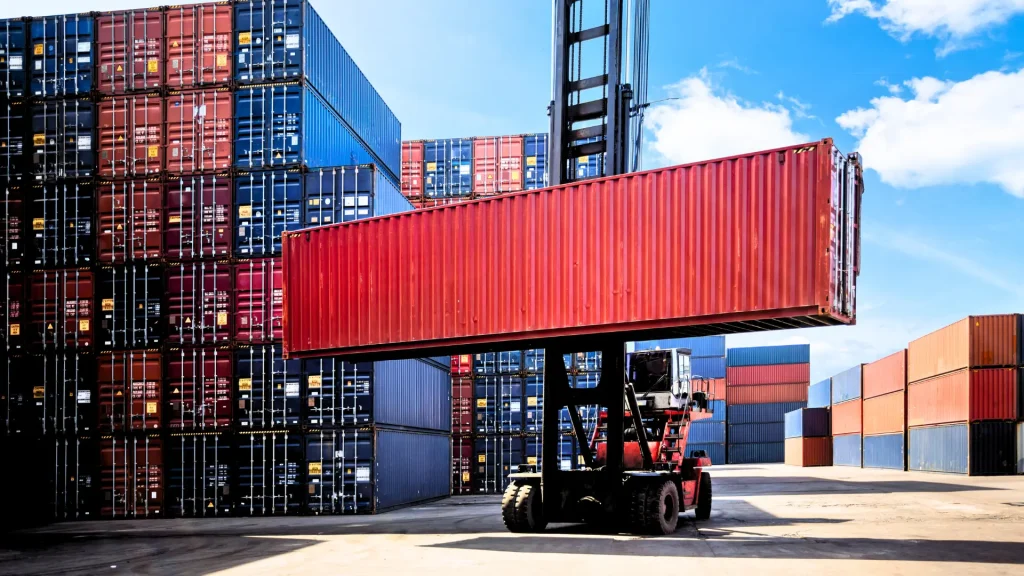
Consequences of Non-Compliance
Failing to accurately declare shipping weights can have serious consequences for businesses importing to or exporting from Australia. Moreover, these consequences extend beyond immediate financial costs. In fact, they can affect legal standing, operational efficiency, and even business reputation.
Financial Costs
Firstly, incorrect or incomplete weight declarations often lead to reweighing charges, demurrage fees, and storage costs at the port or logistics hub. Additionally, shipments held for verification can cause lost contracts or missed delivery deadlines, which, consequently, can directly impact revenue and client relationships.
For instance, a 20-foot container intended for export to Asia was held at the Port of Melbourne because the VGM was misdeclared by 1,500 kg. Consequently, the shipper incurred $2,500 in reweighing fees, plus two days of demurrage charges, thereby delaying the client’s production schedule
Legal Penalties
Furthermore, under Australia’s Chain of Responsibility (CoR) laws, every party involved in the transport chain can face legal action if they fail to comply with weight regulations. Specifically, authorities may impose:
- Heavy fines for misdeclaration.
- Prosecution for repeated or severe breaches.
- Mandatory audits or operational restrictions, which can, in turn, disrupt future shipments.
Even when the container has a verified VGM for ocean freight, ignoring domestic container weight limits can still trigger legal consequences.
Operational Risks
In addition, incorrect weight declarations can also create major operational disruptions:
- Shipment delays – containers may be held at the port or rejected by carriers.
- Vessel refusal – overloaded containers risk being offloaded for safety compliance.
- Reputational damage – unreliable shipments can harm relationships with clients, freight forwarders, and carriers.
Ultimately, non-compliance is far more costly than investing in proper weight verification and compliance processes upfront. Therefore, by accurately managing shipping weights, businesses can avoid fines, delays, and damage to their professional credibility.
Practical Compliance Checklist for Importers & Exporters
Ensuring compliance with shipping weight regulations doesn’t have to be complicated. Moreover, by following a clear, step-by-step process, businesses can protect themselves from fines, delays, and operational disruptions. Below is a practical checklist that every importer and exporter in Australia should follow.
- Confirm VGM Using Certified Methods
Firstly, always determine the Verified Gross Mass (VGM) of your containers using a certified weighbridge. Alternatively, you can calculate it by summing all cargo, packing, and tare weight. Additionally, ensure that all equipment is calibrated and certified to meet SOLAS standards. - Verify State-Specific Road and Rail Container Weight Restrictions
Next, check the container weight limits in each Australian state where your shipment will travel. Furthermore, consider both road and rail regulations, and remember that special permits may be required for overweight or oversize loads. - Use Proper Weight Distribution Inside the Container
Moreover, ensure that cargo is evenly distributed within the container to prevent shifting during transport. Proper weight distribution not only protects the goods but also maintains vehicle and vessel stability, reducing the risk of accidents. - Keep Detailed Records of All Weighing and Shipping Documents
In addition, maintain comprehensive records of VGM certificates, weighbridge tickets, packing lists, and shipping documents. This practice ensures legal compliance, provides proof in case of audits, and helps resolve disputes quickly. - Partner with a Reputable Freight Forwarder for Audits and Advice
Finally, work with an experienced freight forwarder or logistics partner who can audit your compliance processes and provide guidance on best practices. Moreover, their expertise can help you navigate complex regulations and avoid costly mistakes.
Conclusion
Ultimately, accuracy in shipping weight is not just about avoiding fines. It’s about safety, efficiency, and building a reliable supply chain. By understanding the core definitions of gross and net weight, mastering the requirement for VGM, and adhering to Australia’s Chain of Responsibility laws, you are investing in the long-term success of your business.
Feeling overwhelmed? Partner with an expert who can simplify the process and ensure every shipment is handled with precision and care. For professional advice or help with all your logistics needs, contact GenFreight today. Doing so will give you peace of mind, knowing that your cargo is not just on its way, but that it’s also legally sound every step of the journey.
FAQs:
How to calculate weight for shipping?
To determine the final shipping weight for international ocean freight, you must calculate the Verified Gross Mass (VGM). This is done using one of two methods:
1) either by weighing the packed container with a certified weighbridge, or
2) by weighing all cargo and packing materials and adding the container’s tare weight.
Are there special permits for overweight containers in Australia?
Yes. If your container’s gross mass exceeds the standard shipping container weight restrictions for road or rail transport in a particular state, you must apply for a special permit from the National Heavy Vehicle Regulator (NHVR) or the relevant state transport authority.
How do Australian weight limits compare with international rules?
,Australian weight restrictions for road transport are separate from international maritime rules like VGM. While VGM is a global standard for vessel safety, Australian laws, particularly the Chain of Responsibility (CoR), govern the maximum weight that can be transported on the nation’s roads and railways. Notably, these limits are often more restrictive than the VGM.