
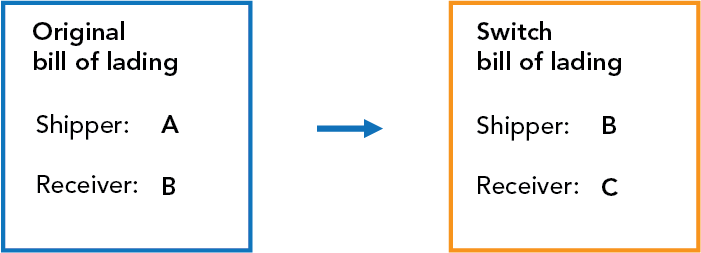
A switch bill of lading is a second set of bills issued by the carrier or its agent in exchange for the original bills once the cargo is already in transit. It refers to the same goods and voyage as the first bill, but certain commercial details (typically shipper, consignee, and sometimes notify party) are changed to reflect a new deal or structure of the trade.
Why are switch bills used?
Switch bills are widely used in triangle trades, where a trader buys from a factory and resells to a different end buyer, and does not want the buyer to see the original supplier’s details or original price structure. They are also requested when goods are sold while at sea, when the port of discharge or final receiver changes, or when corrections are needed to meet customs or regulatory requirements.
How the process works
The party requesting the switch (usually the original shipper or trader) must first ask the carrier or freight forwarder to cancel the first set of originals and issue a new set. The original bills are normally surrendered back, endorsed, and marked as void, and only then is the second set issued, so there is never more than one valid set of bills of lading for the same cargo at any time.
What can and cannot be changed
In a properly issued switch bill, core carriage facts such as the vessel, voyage, cargo description, quantity, and loading date should not be altered in a way that misrepresents the shipment. In practice, the most common legitimate changes are to the shipper/consignee/notify details and sometimes to the final port of discharge where this matches the real routing and contracts.
Risks and legal issues
Switch bills carry real risk because any misrepresentation (for example concealing the true origin, changing quantities, or falsifying dates) can expose the carrier, forwarder, and cargo interests to fraud, insurance, and customs violations. Carriers therefore usually require written instructions and confirmations from all relevant parties, and many have strict internal rules or may simply refuse a switch request they view as unsafe or non‑compliant.
When they are appropriate
Used correctly, switch bills give necessary commercial flexibility for intermediaries and for sales concluded in transit, while keeping documentation aligned with how ownership and destination actually change during a voyage. Used carelessly or to hide material facts, they can invalidate insurance, cause cargo to be held by customs, and lead to serious contractual or even criminal claims.