
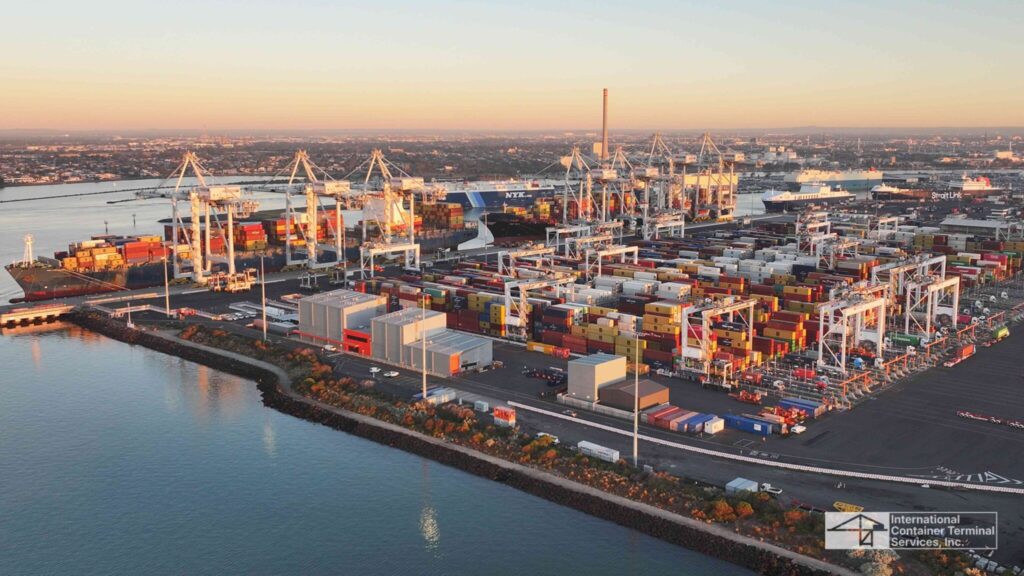
🏗️ 𝗩𝗜𝗖𝗧 𝗸𝗶𝗰𝗸𝘀 𝗼𝗳𝗳 𝗻𝗲𝘅𝘁 𝗣𝗼𝗿𝘁 𝗼𝗳 𝗠𝗲𝗹𝗯𝗼𝘂𝗿𝗻𝗲 𝗲𝘅𝗽𝗮𝗻𝘀𝗶𝗼𝗻 🏗️
Victoria International Container Terminal (VICT) has started Phase 3B of its expansion at the Port of Melbourne, a move that will lift the terminal’s container-handling capacity by around 18% once complete later this year.
𝘞𝘩𝘢𝘵’𝘴 𝘢𝘤𝘵𝘶𝘢𝘭𝘭𝘺 𝘩𝘢𝘱𝘱𝘦𝘯𝘪𝘯𝘨 𝘢𝘵 𝘝𝘐𝘊𝘛?
VICT, the Australian arm of Philippines-based ICTSI, is progressing a multi-phase investment program at its Webb Dock East facility. Phase 3B, which has just commenced, includes:
• One additional automated ship‑to‑shore (STS) quay crane
• Three automated container carriers (ACC)
• Four automated stacking cranes (ASC)
• Two new container storage blocks
The work builds on Phase 3A, completed in late 2023, which already increased VICT’s capacity by 30% to 1.25 million TEU, extended the quay to 735 m, and enabled two 366 m vessels to berth side‑by‑side. Phase 3B is scheduled for completion later this year and forms part of a broader investment program targeting around 1.6 million TEU annual capacity by late 2026/2027.
From a forwarding and shipping operations perspective, three things stand out…
1) More capacity in a constrained port
Melbourne continues to handle the highest container volumes in Australia, and terminal congestion has been a recurring pain point during peak seasons and disruption periods. Adding roughly 18% more capacity at VICT directly increases the port’s ability to absorb volume spikes, reduce anchorage times, and smooth truck turn times.
2) Bigger ships, more direct calls
VICT is already Melbourne’s only terminal able to receive neo‑Panamax class vessels, and the ongoing crane and yard upgrades are explicitly designed to support larger ships and higher quayside productivity. For shippers, that means:
• More scope for direct all‑water services into Melbourne
• Better utilization of large vessels on key trades (Asia–Australia, Europe–Australia)
• Potentially more stable schedules and fewer rollovers during peaks
3) Long‑term certainty for planning
Alongside the physical expansion, ICTSI has secured a 26‑year extension of its operating contract at Webb Dock East, running to 2066. That effectively locks in a 40‑year concession and gives carriers, forwarders, and major BCOS a long planning horizon for capacity, equipment, and service design in Melbourne.
VICT’s expansion is one piece of a larger port‑wide program. The Port of Melbourne itself has secured a long‑term lease over the former Melbourne Market site (around 29 ha) for warehousing, heavy‑vehicle facilities, empty container storage, and an Urban Freight Consolidation Centre, with demolition underway and major works through 2026.
Together, these projects signal a multi‑billion‑dollar commitment to keeping Melbourne competitive as vessel sizes grow and supply chains demand more resilience.