🏗️ 𝗔𝘂𝘀𝘁𝗿𝗮𝗹𝗶𝗮 𝗧𝗲𝘀𝘁𝗶𝗻𝗴 𝘁𝗵𝗲 𝗙𝘂𝘁𝘂𝗿𝗲 𝗼𝗳 𝗣𝗼𝗿𝘁 𝗔𝘂𝘁𝗼𝗺𝗮𝘁𝗶𝗼𝗻 🏗️
When people hear “port automation,” they often picture futuristic terminals overseas. But Australia is already home to some of the region’s most significant automation deployments, and new research on autonomous cranes could shape the next stage.
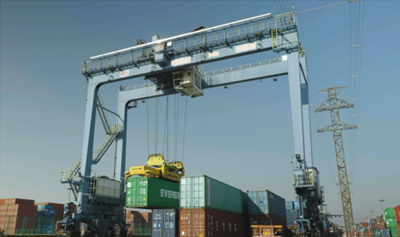
A recent 𝘚𝘤𝘪𝘦𝘯𝘤𝘦 𝘙𝘰𝘣𝘰𝘵𝘪𝘤𝘴 study introduced Autane, an autonomous crane system designed for rubber-tyred gantry (RTG) cranes. It is intended to enable autonomous, safety-critical container grabbing, transport and placement in port yards, with a focus on sustained operations rather than short demonstration runs.
Patrick Terminals’ Brisbane AutoStrad Terminal opened in 2007 as Australia’s first automated container terminal. Patrick also operates automated straddle-carrier operations at Sydney’s Port Botany, where its SABRE project created what the company describes as the world’s first fully automated container exchange between an automated straddle terminal and an automated on-dock rail terminal.
At Port Botany, the SABRE project uses automated rail-mounted gantry cranes to load and unload containers directly onto rail wagons. The $190 million project includes four 600-metre rail sidings and three automated rail-mounted gantry cranes, supporting capacity of up to 500,000 TEU annually on rail.
The Australian experience so far has largely involved:
• Automated straddle carriers moving and stacking containers
• Automated stacking cranes in container yards
• Automated rail-mounted gantries for on-dock rail operations
• Remote operation and semi-automation of ship-to-shore cranes
• Digital systems to coordinate vessels, yards, trucks and rail
For example, Liebherr delivered a semi-automated ship-to-shore crane to Patrick’s Brisbane AutoStrad terminal in 2023. The crane automates the landside cycle while retaining remote operator control for vessel-side pick-and-place and exception handling.
Automation does not have to mean removing people from every part of the operation though. In many ports, the near-term model is human oversight plus automated execution, particularly for complex or exception-based tasks.
The Port of Brisbane is now looking beyond individual pieces of automated equipment.
Working with QUT (Queensland University of Technology) and iMOVE Australia, the port is developing a framework for autonomous short-haul container transfers between terminals, depots and the Brisbane Multimodal Terminal. The project will use a digital twin to assess safety, regulatory, technical and security requirements for low- and zero-emission autonomous vehicles operating within the port.
This matters because terminal automation only delivers part of the benefit if containers still need to be moved manually between the terminal, rail terminal and depot. This research is focused on connecting those links.
📸 and reference https://lnkd.in/gdw-3mhk