
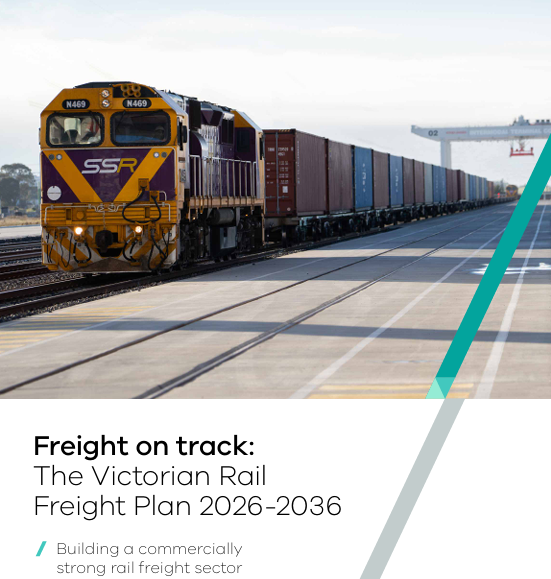
🚂 𝗩𝗶𝗰𝘁𝗼𝗿𝗶𝗮’𝘀 𝘁𝗲𝗻 𝘆𝗲𝗮𝗿 𝗿𝗮𝗶𝗹 𝗳𝗿𝗲𝗶𝗴𝗵𝘁 𝗽𝗹𝗮𝗻: 𝗽𝘂𝘁𝘁𝗶𝗻𝗴 𝘁𝗵𝗲 𝗻𝗲𝘁𝘄𝗼𝗿𝗸 “𝗙𝗿𝗲𝗶𝗴𝗵𝘁 𝗼𝗻 𝗧𝗿𝗮𝗰𝗸” 🚂
Victoria has launched 𝘍𝘳𝘦𝘪𝘨𝘩𝘵 𝘰𝘯 𝘛𝘳𝘢𝘤𝘬: 𝘛𝘩𝘦 𝘝𝘪𝘤𝘵𝘰𝘳𝘪𝘢𝘯 𝘙𝘢𝘪𝘭 𝘍𝘳𝘦𝘪𝘨𝘩𝘵 𝘗𝘭𝘢𝘯 2026–2036, setting out a 10-year framework to expand rail freight capacity, improve reliability and resilience, attract private investment, and encourage more businesses to use rail.
Victoria’s freight task is set to more than double, from approximately 440 million tonnes in 2020–21 to 908 million tonnes by 2050–51. At the same time, freight operators are managing rising costs, supply-chain disruption, congestion and the need to reduce transport emissions.
Rail already plays a significant role in moving agricultural commodities, grain, paper products, mineral sands and containerised freight across the state. Regional freight trains transport more than $2 billion worth of freight annually.
The Victorian Government says it has invested almost $600 million in the regional rail freight network.
The broader Victorian Freight Plan notes that previous rail upgrades have increased train lengths from around 650 to 800 metres and lifted axle loads from 19 to 20 tonnes. This has increased payloads from approximately 2,000 to 3,000 tonnes per train, the equivalent of around 25 B-double movements.
The next decade will be less about choosing “road or rail” and more about designing the right combination of modes for each freight task.
For freight forwarders, importers, exporters and transport operators, several issues will be worth monitoring:
1. 𝘛𝘦𝘳𝘮𝘪𝘯𝘢𝘭 𝘥𝘦𝘷𝘦𝘭𝘰𝘱𝘮𝘦𝘯𝘵
The delivery of Dandenong South and the wider Port Rail Shuttle Network will be critical. Industry will need clarity around terminal capacity, operating hours, service frequency and connections to major industrial precincts.
2. 𝘙𝘦𝘭𝘪𝘢𝘣𝘪𝘭𝘪𝘵𝘺 𝘢𝘯𝘥 𝘮𝘢𝘪𝘯𝘵𝘦𝘯𝘢𝘯𝘤𝘦
Rail customers need predictable services. Ongoing maintenance, removal of temporary speed restrictions and improved network planning will be just as important as new construction.
3. 𝘗𝘰𝘳𝘵 𝘤𝘰𝘯𝘯𝘦𝘤𝘵𝘪𝘷𝘪𝘵𝘺
Rail’s ability to connect efficiently with the Port of Melbourne will influence whether customers can achieve genuine end-to-end savings.
4. 𝘐𝘯𝘵𝘦𝘳𝘴𝘵𝘢𝘵𝘦 𝘪𝘯𝘵𝘦𝘳𝘰𝘱𝘦𝘳𝘢𝘣𝘪𝘭𝘪𝘵𝘺
Victoria’s rail network does not operate in isolation. Connections with neighbouring states and the national interstate network must be efficient, compatible and resilient.
5. 𝘗𝘳𝘢𝘤𝘵𝘪𝘤𝘢𝘭 𝘮𝘰𝘥𝘢𝘭-𝘴𝘩𝘪𝘧𝘵 𝘪𝘯𝘤𝘦𝘯𝘵𝘪𝘷𝘦𝘴
Government support may help overcome the initial commercial barriers to using rail, but long-term modal shift will require sustainable services that remain viable after incentives end.
Victoria has now established the long-term direction.
A stronger rail network will not replace road freight, but it can make Victoria’s entire freight system more capable, resilient and sustainable.
https://www.vic.gov.au/sites/default/files/2026-09/DTPC0013-Victorian-Rail-Freight-Plan_RGB_FA.pdf