
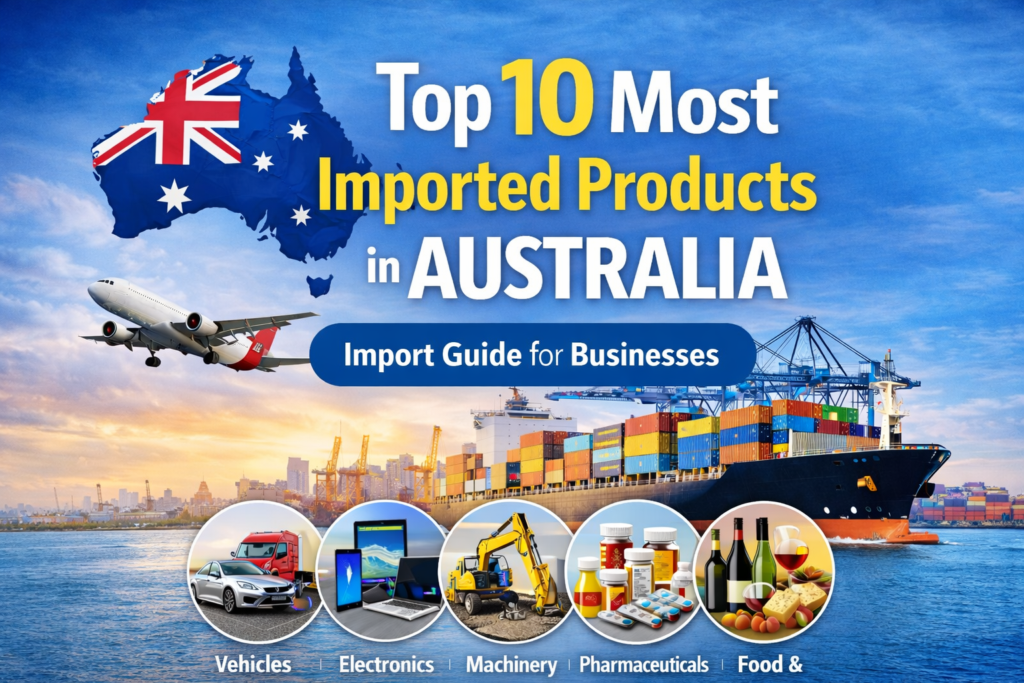
Understanding Australia’s Import Market
Australia is one of the world’s most active trading economies, importing billions of dollars worth of goods each year to support industries, retail businesses, and consumers. Due to the country’s relatively small manufacturing base compared with major global production hubs, many Australian businesses rely heavily on international suppliers to meet demand. According to trade data published by the Australian Bureau of Statistics, imports such as vehicles, electronics, machinery, and fuel consistently make up a significant portion of Australia’s total trade activity.
For businesses involved in global sourcing, understanding which products are most commonly imported into Australia can help identify market opportunities and plan efficient logistics strategies. Working with experienced freight providers offering international sea freight and air freight services can also help ensure goods move smoothly through customs and arrive on time.
In this guide, we explore the top 10 most imported products in Australia and what businesses need to know when shipping these goods.
Top 10 Products Imported into Australia
1. Vehicles and Automotive Parts
Vehicles and automotive parts are consistently among the largest imports into Australia. These include passenger cars, trucks, motorcycles, and replacement components.
Australia imports vehicles primarily from countries such as:
Japan
Thailand
Germany
South Korea
China
Businesses involved in vehicle imports must comply with regulations including Vehicle Import Approval (VIA) and customs requirements.
2. Electrical Machinery and Electronics
Electronics are another major category imported into Australia. Products range from consumer gadgets to industrial electrical equipment.
Common Electronics Import:
Smartphones
Computers and laptops
Household appliances
Telecommunications equipment
Industrial electronics
Many electronics shipments are transported via air freight due to their high value and demand for quick delivery.
3. Petroleum and Fuel Products
Australia imports large quantities of petroleum products due to limited domestic refining capacity.
Key Fuel Imports:
Crude oil
Diesel
Aviation fuel
Refined petroleum products
These shipments usually arrive via specialised tanker vessels and require strict regulatory compliance.
4. Machinery and Industrial Equipment
Machinery imports support Australia’s construction, manufacturing, and mining industries.
Examples of Imported Machinery:
Construction machinery
Manufacturing equipment
Agricultural machinery
Mining equipment
Due to their large size and weight, these items are typically shipped using sea freight containers or breakbulk shipping.
5. Pharmaceuticals and Medical Supplies
Australia imports a large volume of pharmaceutical products and medical supplies to support hospitals and healthcare providers.
Typical Medical Imports:
Medicines and vaccines
Medical devices
Diagnostic equipment
Laboratory supplies
These shipments often require temperature-controlled logistics and specialised handling.
6. Clothing and Textiles
Australia imports a significant amount of clothing and textile products due to limited domestic textile manufacturing.
Major Import Sources:
China
Bangladesh
Vietnam
India
Products include fashion apparel, footwear, fabrics, and home textiles.
7. Furniture and Homeware
Furniture imports continue to grow as retailers and online stores source products from overseas manufacturers.
Common Furniture Imports:
Sofas and seating
Tables and cabinets
Office furniture
Home décor products
These products are usually shipped via containerised sea freight due to their size.
8. Plastics and Plastic Products
Plastic materials are widely imported for manufacturing and packaging purposes.
Typical Plastic Imports:
Packaging materials
Plastic components
Consumer plastic goods
Industrial plastics
These goods support multiple industries including food packaging, construction, and retail.
9. Food Products
Although Australia produces a large amount of food domestically, many specialty food items are still imported.
Common Imported Food Items:
Processed foods
Packaged snacks
Frozen foods
Specialty ingredients
Food imports must comply with strict biosecurity and quarantine regulations.
10. Alcohol and Beverages
Australia imports various alcoholic beverages to meet consumer demand for international brands.
Popular Alcohol Imports:
Wine
Spirits
Craft beer
Premium beverages
Alcohol imports are subject to customs duties, GST, and excise taxes, and may require additional licences.
Key Considerations When Importing Goods into Australia
Importing goods into Australia involves strict regulatory requirements and proper logistics planning. Businesses must ensure their shipments comply with customs laws, biosecurity rules, and import taxation requirements before cargo arrives in the country.
Import regulations are enforced by the Australian Border Force and other government agencies, making it essential for businesses to understand the correct procedures when bringing goods into Australia.
Important Factors Importers Should Consider
Accurate customs documentation
Correct product classification (HS codes)
Biosecurity requirements
Import duties and taxes
Proper freight planning
Working with an experienced freight forwarder can significantly reduce delays and ensure shipments move smoothly through customs.
How GenFreight Helps Australian Importers
GenFreight provides end-to-end freight forwarding and logistics solutions for businesses importing goods into Australia.
Our Import Services:
International sea freight and air freight
Customs clearance services
Import documentation support
Cargo consolidation
Door-to-door delivery
With strong global logistics partnerships, GenFreight helps businesses move cargo efficiently and cost-effectively.
Final Thoughts
Australia relies heavily on international imports to support industries, retail markets, and consumer demand. Understanding the most commonly imported products helps businesses identify opportunities and plan their supply chain effectively.
Whether you are importing electronics, vehicles, furniture, or food products, working with a reliable freight forwarder like GENFREIGHT GLOBAL LOGISTICS can make the entire import process smoother and more efficient.