
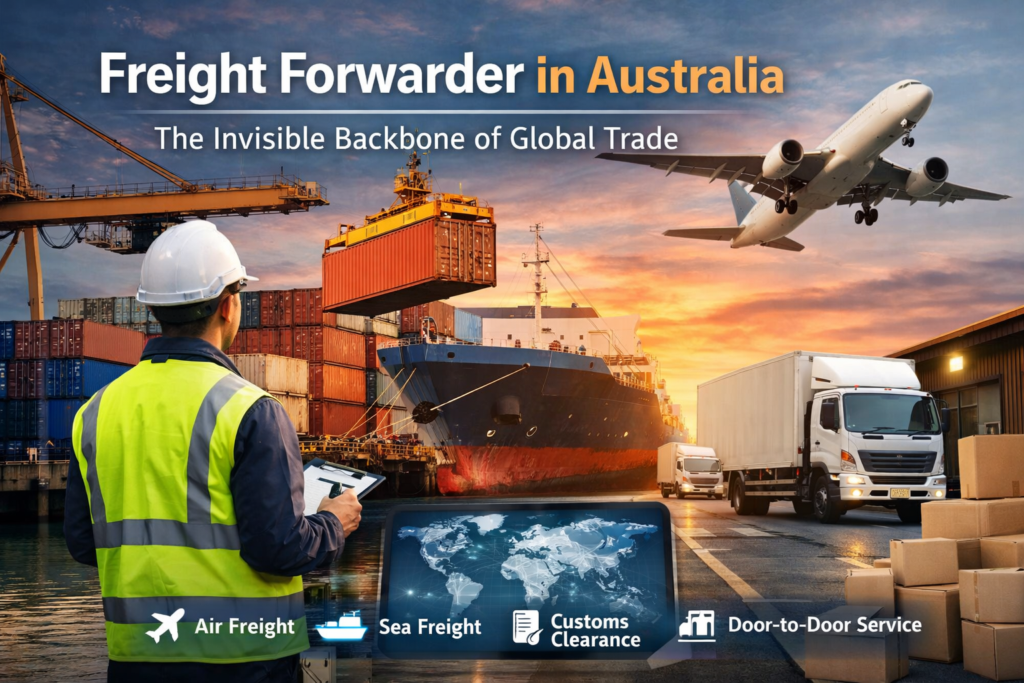
Introduction to Freight Forwarding in Australia
Imagine this.
A business owner in Melbourne finalizes an order with a manufacturer in Shenzhen. Thousands of products need to reach Australia before the holiday shopping season begins. The goods must travel across oceans, pass customs inspections, move through ports, and reach a warehouse on time.
To most people, this process seems almost magical. Goods move across the world with surprising efficiency.
Behind that smooth process is something most businesses rarely think about until something goes wrong: a freight forwarder.
In today’s interconnected economy, a freight forwarder in Australia plays a critical role in ensuring goods move efficiently across international borders. From organizing shipments to navigating complex customs regulations, freight forwarders quietly power global trade.
What Does a Freight Forwarder Actually Do?
A freight forwarder acts as the architect of global logistics.
Rather than physically transporting goods themselves, they coordinate every step of the shipping process.
Core Responsibilities
- Booking cargo space with airlines or shipping lines
- Preparing international shipping documentation
- Managing customs clearance
- Coordinating warehousing and transport
- Providing shipment tracking and updates
This coordination becomes especially important in countries like Australia, where international shipping is essential for most imports and exports.
For businesses, freight forwarders simplify a complex network of carriers, ports, and regulatory requirements.
The Journey of a Shipment: A Real-World Scenario
To understand the value of a freight forwarder, consider the journey of a typical shipment.
A retailer in Sydney orders electronics from overseas. The supplier finishes production and prepares the cargo for export. This is where a freight forwarder steps in.
First, they determine the best shipping method — air freight for speed or sea freight for cost efficiency. They then arrange transport from the supplier’s warehouse to the port.
If the shipment travels by sea, it might depart from an Asian port and arrive at Port of Melbourne, the busiest container port in the country.
Once the cargo arrives in Australia, customs documentation must be processed and approved by the Australian Border Force.
After clearance, the freight forwarder arranges local transportation to the importer’s warehouse.
To the retailer, it appears as though the shipment simply arrived on time. But behind the scenes, dozens of moving parts had to work perfectly.
Why Businesses in Australia Need Freight Forwarders
Australia’s geography presents unique logistics challenges.
Because the country is far from many manufacturing centers, most goods must travel long distances by air or sea.
This makes professional freight forwarding services particularly valuable.
Managing Complex International Logistics
Shipping internationally involves more than simply booking cargo space. Each country has its own regulations, documentation requirements, and inspection processes.
A freight forwarder ensures that shipments comply with these requirements, reducing the risk of delays.
Reducing Shipping Costs
Freight forwarders negotiate shipping rates with global carriers. By consolidating cargo from multiple clients, they can secure better pricing than individual businesses might obtain on their own.
Improving Delivery Reliability
Supply chain disruptions are common in international trade. Weather events, port congestion, or customs issues can delay shipments.
Experienced freight forwarders anticipate these risks and develop contingency plans.
Types of Freight Services in Australia
Freight forwarders typically offer several shipping options depending on cargo size, urgency, and budget.
Air Freight
Air freight is the fastest method for transporting goods internationally.
It is commonly used for:
- High-value electronics
- Medical supplies
- Perishable goods
- Urgent shipments
Air cargo entering Australia often passes through hubs such as Sydney Airport, which handles significant international freight traffic.
Sea Freight
Sea freight is the most cost-effective option for large shipments.
It is widely used for:
- Manufacturing equipment
- Retail inventory
- Bulk commodities
- Furniture and building materials
Although slower than air freight, sea freight allows businesses to transport large quantities of goods economically.
Door-to-Door Logistics
Many modern freight forwarders offer end-to-end logistics services, managing shipments from the supplier’s location all the way to the final destination.
This includes warehousing, inland trucking, and customs clearance.
Choosing the Right Freight Forwarder in Australia
Selecting a freight forwarding partner is a strategic decision for any business involved in international trade.
Several factors should be considered.
Industry Experience
Experienced freight forwarders understand the complexities of global shipping routes, carrier schedules, and customs requirements.
Global Network
A strong international network allows freight forwarders to coordinate shipments across multiple countries efficiently.
Technology and Visibility
Modern logistics relies heavily on digital tracking systems. Businesses should choose freight forwarders that offer real-time shipment visibility.
Customer Support
Clear communication is essential when managing international shipments. Reliable freight forwarders provide proactive updates and responsive customer service.
The Role of Technology in Modern Freight Forwarding
Freight forwarding has evolved significantly over the past decade.
Digital platforms now allow businesses to track shipments in real time, manage documentation online, and receive automated updates about cargo status.
Automation is also improving customs processing and reducing paperwork delays.
These technological advancements are transforming logistics from a reactive process into a proactive system where potential disruptions can be predicted and managed in advance.
Sustainability in Global Logistics
Environmental sustainability is becoming increasingly important in the logistics industry.
Shipping companies and freight forwarders are exploring ways to reduce carbon emissions through:
- Optimized shipping routes
- Alternative fuels
- Efficient cargo consolidation
- Greener warehousing practices
Businesses that prioritize sustainable logistics practices can reduce their environmental impact while maintaining efficient supply chains.
Why Businesses Choose GenFreight
For companies importing and exporting goods, partnering with a reliable logistics provider can simplify global trade.
GenFreight provides comprehensive freight forwarding services designed to help businesses navigate the complexities of international shipping.
Key services offered:
- Air and sea freight
- Customs clearance
- Door-to-door delivery
- Global freight network
- Competitive rates
By combining logistics expertise with strong industry partnerships, GenFreight helps businesses move goods efficiently across international markets.
The Future of Freight Forwarding in Australia
Global trade continues to expand, and freight forwarding will play an increasingly important role in supporting international commerce.
Emerging trends shaping the industry include:
- Digital freight platforms
- Artificial intelligence in logistics planning
- Blockchain for shipment documentation
- Greater transparency in supply chains
As technology advances, freight forwarding companies will continue to innovate, making global trade faster, more reliable, and more efficient.
Final Thoughts
The next time a shipment arrives on time, it may seem like a simple event.
But behind that delivery is a complex system of logistics planning, coordination, and expertise.
A reliable freight forwarder in Australia ensures that goods move seamlessly across borders, supporting businesses, retailers, and industries across the country.
For companies involved in international trade, partnering with an experienced logistics provider like GenFreight can make the difference between supply chain uncertainty and dependable global shipping.