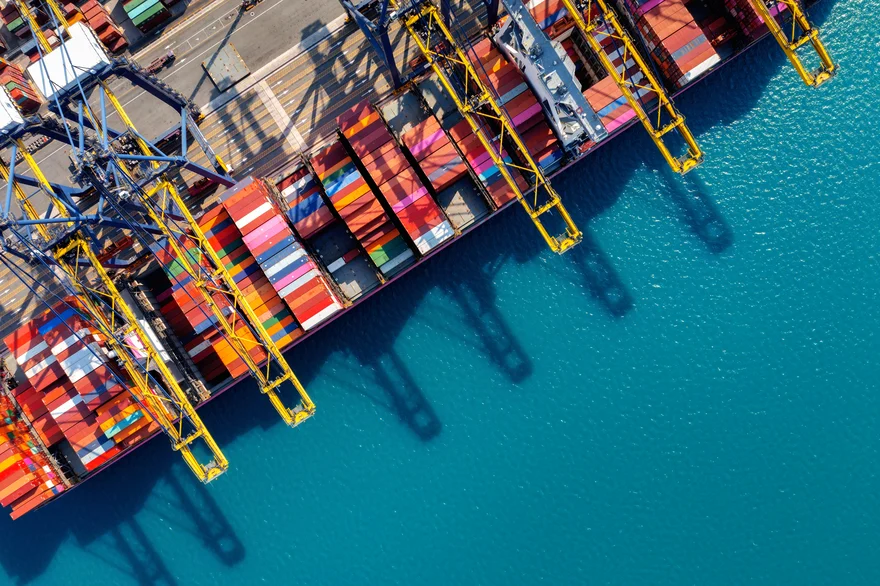
Congestion at major Asian ports is now the single biggest driver of global container delays, and Australia is feeling it directly through longer transit times, tighter space, and rising rates on key trade lanes.
Global container schedule reliability fell to 56.4% in July 2026, the sharpest one‑month drop since January 2021, with average late arrivals now running just over six days. This is attributed to congestion across Asia’s busiest hubs, where 14 major ports recorded fewer on‑time vessel arrivals in July.
Shanghai’s reliability fell to about 21% of vessels arriving on time, while Ningbo‑Zhoushan, Hong Kong, Yantian and others all saw double‑digit percentage‑point falls. Typhoons hitting China have compounded the problem, closing terminals for days and creating long anchorage queues.
Australia’s trade with Asia means these delays don’t stay in China; they cascade into Australian ports via vessel bunching, missed connections and equipment shortages.
Key impacts already showing up in Australia include…
~ Longer and more variable transit times from North Asia
Standard Shanghai/Ningbo–East Coast Australia transits of 11–19 days are stretching to 22–26+ days when typhoon backlogs and port omissions are factored in. Some forwarders are quoting Shanghai–Brisbane at around 31 days base, with worst‑case scenarios pushing past 40 days before adding extra typhoon buffers.
~ Vessel bunching at Australian gateways
Off‑schedule arrivals from Asia are creating “lumpy” vessel patterns in Australia, with multiple ships arriving close together after long delays. Brisbane is currently the most affected East Coast port, with terminal delays from vessel bunching expected to persist through October. Melbourne and Sydney are also seeing elevated congestion and berth waits of up to five days reported in recent weeks.
~ Tighter space and higher rates on Asia–Australia lanes
Space is tight into Fremantle and Adelaide, and consistently tight into the East Coast, pushing rates higher.
~ Equipment and documentation pressure
Global container queues have hit multi‑year highs, with millions of TEU stuck at anchor in Asia, feeding equipment repositioning issues and increasing rollover risk for FCL and LCL cargo to Australia. At the same time, Australia’s 2026/27 BMSB (Brown Marmorated Stink Bug) season started on 1st September with updated treatment and documentation rules, adding another layer of complexity for importers already dealing with delayed and bunched arrivals.
As we know, China’s Golden Week is also approaching, and we are already urging for earlier bookings and planning on longer lead times for China‑origin freight. Exporters sending components or raw materials into China should anticipate similar scheduling volatility on the return leg.
It is important to keep close contact with your forwarder and monitor port operation updates.
📸 and reference https://info.oceania.kln.com/konnect/konnect-september-2026