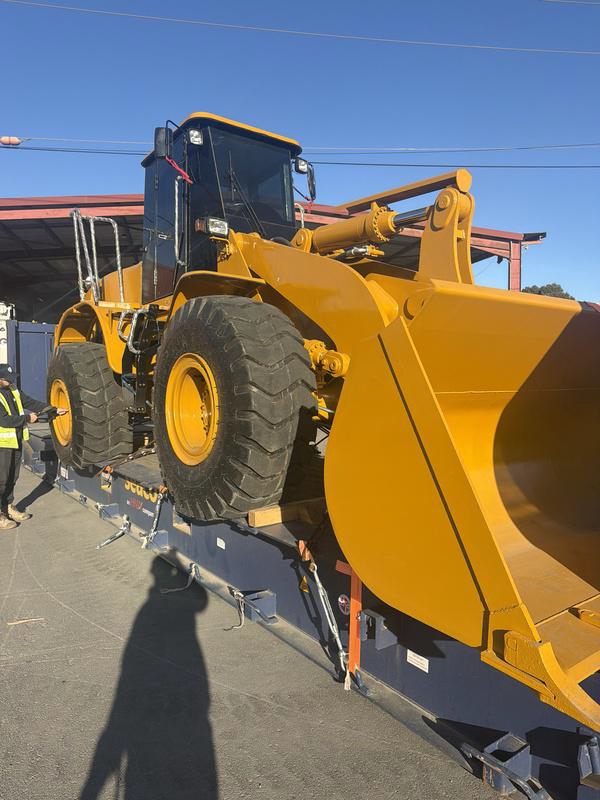
🚚 𝗕𝗲𝗵𝗶𝗻𝗱 𝘁𝗵𝗲 𝗦𝗰𝗲𝗻𝗲𝘀 𝗼𝗳 𝗮𝗻 𝗢𝘃𝗲𝗿𝘀𝗶𝘇𝗲𝗱 𝗟𝗼𝗮𝗱𝗲𝗿 𝗦𝗵𝗶𝗽𝗺𝗲𝗻𝘁 🚚
From preparing the machine in Shanghai, to unloading it in Adelaide, a flat rack shipment brings together equipment selection, load planning, specialist securing, shipping coordination and Australian import requirements.
This is how we moved a loader from China to Australia recently…
1. 𝘗𝘭𝘢𝘯𝘯𝘪𝘯𝘨
The first step is confirming the loader’s transport dimensions and weight, including its bucket, attachments and any components that will travel separately.
These details determine the equipment required, and whether the loaded flat rack will be out of gauge (OOG), meaning the cargo extends beyond the container’s normal transport envelope. Incorrect declarations can result in revised charges, or the shipment missing its intended sailing.
For this oversized shipment, the booking had to also account for the space the cargo occupies around and above the flat rack.
2. 𝘗𝘳𝘦𝘱𝘢𝘳𝘪𝘯𝘨
Imported machinery must be free from soil, seeds, plant material and other biosecurity contamination. For a loader, that means paying close attention to areas such as the tyres, bucket, underbody and other places where contamination can collect. Cleaning required access to concealed areas, with partial dismantling.
3. 𝘗𝘢𝘤𝘬𝘪𝘯𝘨 𝘢𝘯𝘥 𝘴𝘦𝘤𝘶𝘳𝘪𝘯𝘨
For machinery, “packing” means positioning, supporting and securing the load for its journey.
The loader was placed on the flat rack according to a loading plan that considered its weight distribution, support points and securing requirements. Suitable bedding, blocking and lashings were then used to help prevent movement during handling and sea transport.
Once packing was complete, the final loaded dimensions and securing details needed to match what had been declared to the shipping line.
4. 𝘚𝘩𝘢𝘯𝘨𝘩𝘢𝘪 𝘵𝘦𝘳𝘮𝘪𝘯𝘢𝘭 𝘵𝘰 𝘰𝘤𝘦𝘢𝘯 𝘷𝘰𝘺𝘢𝘨𝘦
After the required booking and terminal arrangements were complete, the loaded flat rack moved into the export terminal for shipment.
Oversized machinery requires particular attention to its exposed dimensions and handling arrangements.
5. 𝘈𝘳𝘳𝘪𝘷𝘢𝘭 𝘢𝘯𝘥 𝘤𝘭𝘦𝘢𝘳𝘢𝘯𝘤𝘦 𝘪𝘯 𝘈𝘥𝘦𝘭𝘢𝘪𝘥𝘦
Customs clearance, shipping-line release and applicable biosecurity requirements were addressed before the cargo completed its onward journey.
Depending on the machinery and directions issued, inspection may take place at the wharf precinct or an approved arrangement site. In our case, it was at an approved site.
6. 𝘜𝘯𝘱𝘢𝘤𝘬𝘪𝘯𝘨 𝘢𝘯𝘥 𝘧𝘪𝘯𝘢𝘭 𝘥𝘦𝘭𝘪𝘷𝘦𝘳𝘺
The receiving team needed to coordinate the unloading method, suitable equipment, safe access and the loader’s onward transport. Securing materials and timber supports were removed in a controlled sequence, the machine was then taken off the flat rack, and its condition is checked against the shipment records.
A successful oversized shipment connects every stage ✔️