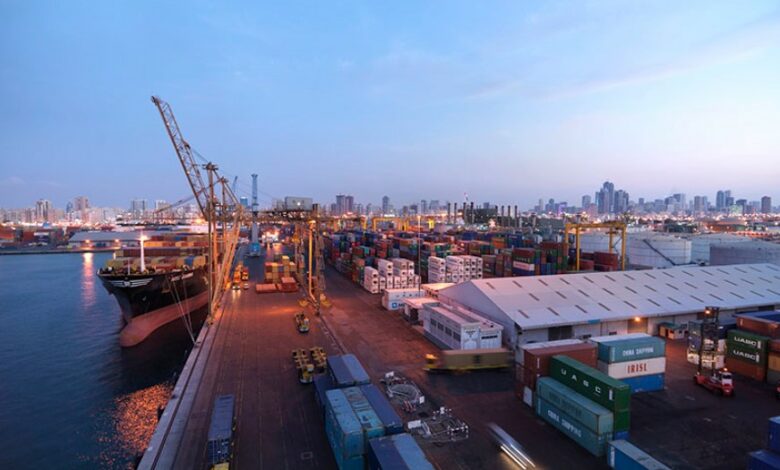
🛳️ 𝗠𝗶𝗱𝗱𝗹𝗲 𝗘𝗮𝘀𝘁 𝗣𝗼𝗿𝘁 𝗖𝗼𝗻𝗴𝗲𝘀𝘁𝗶𝗼𝗻 𝗔𝘁 𝗥𝗲𝗰𝗼𝗿𝗱 𝗟𝗲𝘃𝗲𝗹𝘀 🛳️
Port congestion across the Middle East has reached record levels, with severe delays reported at key UAE gateways including Khor Fakkan, Fujairah and Sharjah.
For Australian importers and exporters, the impact may not show up as a direct Melbourne–Gulf delay, but it is already working its way through transhipment networks, equipment availability and schedule reliability.
Average vessel waiting times of 7.25 days have been reported at Khor Fakkan and 8.86 days at Fujairah, while transfers from those ports to Jebel Ali, Sharjah and Abu Dhabi have stretched from around five days to 12–15 days.
The pressure is no longer confined to berths, terminal yard capacity, inland transport and cargo evacuation are all under strain.
Australia’s trade with the Gulf and Indian Ocean region often depends on the same global carrier networks, transhipment hubs and vessel rotations that are now absorbing Middle East disruption. When vessels are delayed, rerouted or bunch at alternative gateways, the effects can flow into Australian services through missed connections, schedule changes and equipment imbalances.
The broader Middle East situation has already contributed to longer voyage times, blank sailings, conflict-related surcharges and rate volatility for Australian-bound cargo. Even services that do not transit the Middle East can be affected when vessels, containers and crew resources are displaced across global networks.
For Australian shippers moving cargo to or from the Gulf, the immediate risks are:
• Longer transit times, particularly where cargo is being transferred between UAE terminals or routed through alternative gateways.
• Reduced schedule reliability, with vessels arriving and departing several days behind plan.
• Equipment and reefer constraints, with some carriers suspending or restricting reefer and dry-cargo bookings to affected destinations.
• Higher landed-cost uncertainty, as emergency freight rates, rerouting, storage and inland movements add cost beyond the base ocean freight rate.
For perishable and time-sensitive cargo, the issue is especially acute. Reefer bookings have reportedly been suspended to and from several Gulf destinations, while some cargo is being redirected through Salalah, Khor Fakkan and other regional gateways before onward feeder or landbridge movement.
This is a moment for proactive planning rather than waiting for a carrier notice.
📸 and reference Splash247