
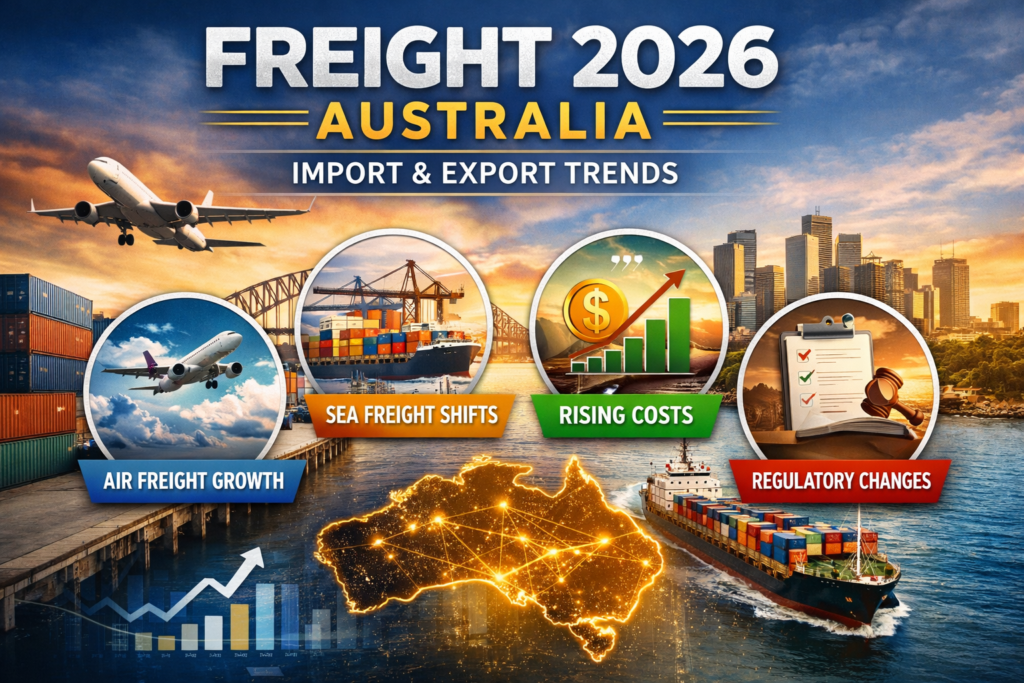
Australia’s freight and logistics industry continues to evolve as global trade patterns, rising costs, and capacity pressures reshape import and export operations. For businesses relying on air freight, sea freight, and a reliable freight forwarder, staying informed is essential for controlling risk and maintaining supply chain efficiency.
At GENFREIGHT, we work closely with importers and exporters to navigate these changes. Below are the key freight trends affecting Australian businesses and what they mean for your cargo.
Growing Demand for Air Freight Capacity
Air freight demand remains strong, particularly for time‑sensitive, high‑value, and e‑commerce shipments. Ongoing capacity constraints and fluctuating fuel costs mean pricing can change quickly.
What This Means for Importers and Exporters
- Advanced planning is critical to secure space
- Flexible routing can reduce delays
- Experienced freight forwarders help manage volatile rates
Using air freight strategically can protect delivery timelines when supply chains are under pressure.
Sea Freight Remains the Backbone of Global Trade
Despite global uncertainty, sea freight continues to be the most cost‑effective option for large‑volume imports and exports. Australian ports are seeing steady container volumes, but congestion and schedule changes still occur.
Key Sea Freight Considerations
- FCL and LCL options offer flexibility
- Longer lead times require accurate forecasting
- Documentation accuracy is essential to avoid delays
A knowledgeable freight forwarder helps businesses balance cost efficiency with reliability when using sea freight.
Rising Costs Across the Freight Sector
Fuel surcharges, port fees, and operational costs are impacting freight pricing across both air freight and sea freight. These increases place pressure on margins for Australian importers and exporters.
How Businesses Can Respond
- Review freight strategies regularly
- Consolidate shipments where possible
- Work with a freight forwarder offering transparent pricing
Proactive freight planning can significantly reduce unexpected costs.
Compliance Is More Important Than Ever
Australian import and export regulations remain strict, particularly around customs, biosecurity, and documentation. Errors can lead to inspections, penalties, or shipment delays.
Genfreight supports clients with:
- Customs clearance expertise
- Accurate import and export documentation
- Ongoing compliance guidance
This reduces risk and keeps cargo moving smoothly through ports and airports.
Choosing the Right Freight Forwarder in 2026
With increasing complexity across global logistics, selecting the right freight forwarder is a critical business decision.
Look for a freight forwarder that offers:
- Expertise in air freight and sea freight
- Strong global agent networks
- Clear communication and proactive problem‑solving
- In‑depth knowledge of Australian import and export requirements
The right partner adds resilience to your supply chain.
Why Australian Businesses Choose GENFREIGHT
GENFREIGHT is an experienced Australian freight forwarder providing tailored solutions for air freight, sea freight, and end‑to‑end import and export management. Our focus on reliability, compliance, and customer service helps businesses trade with confidence.
Whether you’re shipping urgent cargo by air or managing high‑volume sea freight, Genfreight delivers logistics solutions designed around your business needs.
Australia’s freight landscape is changing, but the fundamentals remain the same: smart planning, compliance, and the right freight forwarder make all the difference. Understanding when to use air freight or sea freight can help importers and exporters stay competitive in 2026 and beyond.
For expert freight forwarding support in Australia, GENFREIGHT is here to help.