
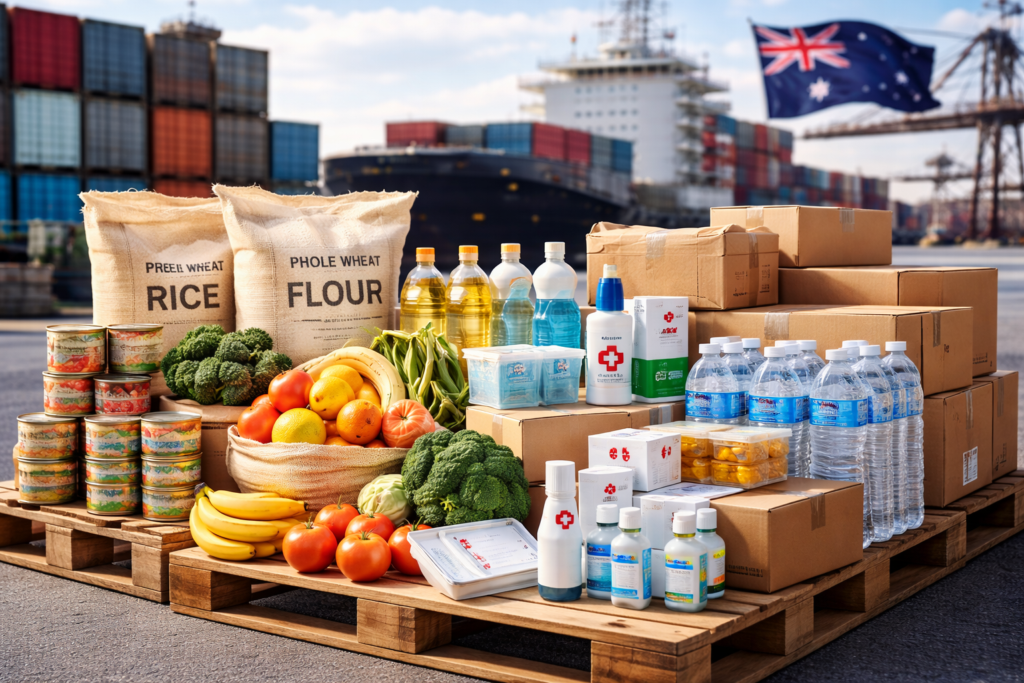
Essential goods keep Australia moving. From food and medical supplies to energy equipment and critical spare parts, these products support hospitals, supermarkets, manufacturers, and infrastructure nationwide.
Importing essential goods into Australia requires speed, accuracy, and strict regulatory compliance. At GenFreight Global Logistics, we help businesses navigate customs, biosecurity, and freight requirements to ensure critical cargo arrives without delay.
Here’s what you need to know.
What Are Considered Essential Goods?
Essential goods generally include:
- Food and beverages
- Pharmaceutical products
- Medical equipment and PPE
- Agricultural inputs (fertilisers, seeds)
- Energy and infrastructure components
- Critical machinery spare parts
Depending on the product category, different authorities regulate the import process.
1. Customs Clearance & Documentation
All imports must be declared to the Australian Border Force.
To clear essential goods efficiently, you’ll need:
- Commercial invoice
- Packing list
- Bill of Lading or Air Waybill
- Import declaration
- Relevant permits (if required)
Incorrect tariff classification or incomplete documentation can result in costly delays, particularly problematic for time-sensitive shipments like medical or food products.
2. Biosecurity & Health Regulations
Australia has some of the strictest biosecurity laws in the world, enforced by the Department of Agriculture, Fisheries and Forestry.
Essential goods such as food, agricultural inputs, and certain medical products may require:
- Biosecurity inspections
- Import permits
- Treatment certification
- Compliance with Australian standards
Non-compliance can result in re-export, destruction, or lengthy holds.
3. Duties, GST & Tariff Classification
Most essential goods are subject to:
 Customs Duty (often 0–5% depending on classification and trade agreements) GST (10% applied to customs value + duty + freight + insurance)
Some goods may qualify for:
- Free Trade Agreement (FTA) concessions
- Duty exemptions
- Tariff concessions
Accurate classification ensures you don’t overpay duty or face reassessments later.
4. Choosing the Right Freight Method
Essential goods are often time-sensitive.
 Air Freight
Best for urgent shipments such as:
- Medical equipment
- Pharmaceuticals
- Emergency spare parts
Advantages:
- Fast transit
- Reduced disruption
- Lower exposure time
 Sea Freight
Suitable for:
- Bulk food products
- Large equipment
- Infrastructure materials
More cost-effective for high-volume shipments.
At GenFreight, we help determine the most efficient transport solution based on urgency, cost, and supply chain impact.
5. Cold Chain & Temperature Control
Certain essential goods require controlled environments:
- Vaccines
- Pharmaceuticals
- Perishable food products
Temperature excursions can render products unusable. Proper cold chain management ensures compliance and product integrity from origin to final delivery.
6. Warehousing & Distribution in Australia
After customs clearance, essential goods may require:
- Bonded warehousing
- Temperature-controlled storage
- Fast-track distribution to retailers or facilities
- Last-mile logistics
An integrated logistics partner reduces handling time and improves supply chain reliability.
Common Challenges When Importing Essential Goods
- Biosecurity inspection delays
- Incorrect permits or missing certifications
- Tariff misclassification
- Port congestion
- Inadequate freight planning
When goods are essential, delays can disrupt businesses and communities.
Why Work with GenFreight?
Importing essential goods is about more than moving cargo, it’s about reliability and compliance.
GenFreight Global Logistics provides:
Expert customs brokerage Air and sea freight solutions Biosecurity compliance guidance Cold chain coordination End-to-end import management
We work with Australian businesses to ensure critical goods arrive on time and fully compliant with regulations.
Final Thoughts
Australia depends on efficient supply chains for essential goods. With proper planning, accurate documentation, and experienced freight support, businesses can import smoothly and avoid costly disruptions.
If you’re planning to import essential goods into Australia, speak with GenFreight before your shipment departs. Early preparation ensures faster clearance and fewer surprises.
Need support importing essential goods into Australia?
Contact GenFreight Global Logistics for tailored freight and customs solutions.