
Offshore CO₂ storage is quietly creating a whole new shipping segment: liquefied CO₂ (LCO₂) transport and offshore injection logistics.
Carbon goes to sea: why shipping is suddenly central
As large emitters commit to carbon capture and storage (CCS), the biggest constraint is often not capture technology but how to move CO₂ to suitable offshore storage sites. Pipelines work for a few large, fixed sources, but they are expensive, slow to permit and inflexible for dispersed industrial clusters. This is where shipping steps in: purpose‑built LCO₂ carriers can shuttle carbon from multiple ports to offshore hubs, much like today’s LPG or LNG trades, but in reverse climate logic—moving waste away from the atmosphere.
By 2030, analysts expect CO₂ shipping volumes to exceed 90 million tonnes per year, requiring dozens of dedicated carriers and nearly 50 import/export terminals worldwide. For shipowners, ports and logistics providers, that is the outline of a brand‑new value chain running parallel to traditional energy shipping.
How the LCO₂ chain works
In a typical setup, industrial plants capture CO₂, compress it and send it to a coastal terminal where it is liquefied and stored in refrigerated tanks. From there, LCO₂ carriers load in batches, sail to a receiving terminal linked to an offshore storage site, and discharge either into onshore buffer tanks or directly into subsea pipelines for injection. The whole chain has to match a continuous capture rate onshore with inherently discrete ship movements offshore, so intermediate storage and careful scheduling become critical.
Projects like Northern Lights on the Norwegian continental shelf show this model in practice: purpose‑built 7,500–12,000 m³ CO₂ carriers shuttle between European emitters and a receiving terminal at Øygarden, feeding injection into a reservoir 2,600 metres under the seabed. Phase‑two expansion is already underway, with capacity targets stepping from 1.5 to at least 5 million tonnes per year and a larger, chartered fleet to match.
The ships: gas‑carrier DNA, new cargo
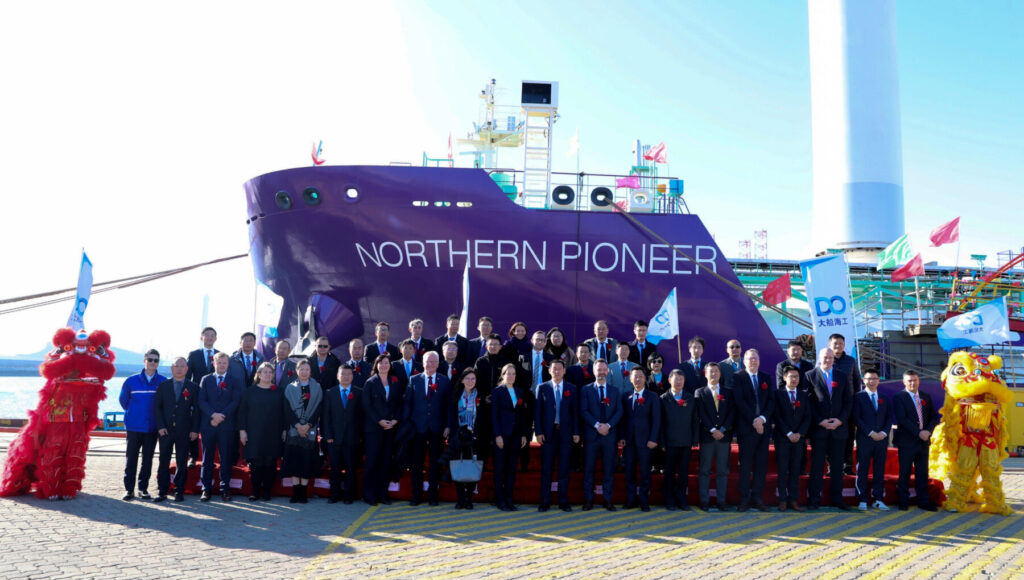
LCO₂ carriers borrow heavily from LPG and other liquefied‑gas designs but tailor tanks, cargo handling and safety systems to CO₂’s unique phase behaviour. Northern Lights’ first vessel, the Northern Pioneer, for example, is a 130‑metre ship with about 7,500 m³ cargo capacity, designed to carry CO₂ at up to 19 barg and around −35 °C. It runs primarily on LNG and incorporates features like rotor sails and air‑lubrication to cut fuel consumption and emissions from the transport leg itself.
Japanese and European yards and owners are now pushing further, with AiPs issued for new LCO₂ tank technologies and floating liquefied storage units (FLSUs) that can liquefy and buffer CO₂ offshore rather than on land. These offshore units blur the line between ship and platform, opening options for “C‑hub” concepts where ships deliver CO₂ to a floating facility that handles final conditioning and well injection.
Snapshot: emerging CO₂ shipping and offshore storage assets
New trades, new challenges for maritime logistics
From a commercial and operational perspective, CO₂ shipping sits at the intersection of gas shipping, project cargo and offshore services.
- Trade pattern: Many routes will be short‑sea or regional (e.g. North Sea, Baltic, Mediterranean) with frequent calls and tight integration into industrial schedules, rather than long‑haul tramp trades.
- Availability demands: CCS economics rely on high injection uptime, so CO₂ carriers and terminals are expected to run with LNG‑style reliability, supported by redundancy in ships, storage and berths.
- Port and terminal design: New CO₂ jetties must manage cryogenic or high‑pressure cargo, boil‑off handling and safety zones while co‑existing with conventional bulk, container and energy traffic.
- Emissions balance: Over long routes, transport emissions can reach several percent of the CO₂ moved, so vessel efficiency and fuel choice are under scrutiny to preserve the net‑climate benefit.
For port authorities and logistics planners, this translates into berth allocation for LCO₂ carriers, dedicated handling equipment, and integration of CO₂ flows into existing dangerous‑goods regimes.
Onboard capture: ships as mobile CO₂ sources
There is also an inward‑facing angle: shipping itself is a candidate customer for offshore CO₂ storage through onboard carbon capture and storage (OCCS). Recent studies and pilot projects have shown that retrofitting tankers and other deep‑sea vessels with capture units could cut their operational CO₂ emissions by around 20% in early deployments, with a fuel‑consumption penalty just under 10%. Captured CO₂ would be stored temporarily in deck tanks and discharged at suitable ports into the same LCO₂ infrastructure serving land‑based emitters.
Regulators at the IMO are now actively exploring how OCCS and offshore sequestration fit into the greenhouse‑gas strategy for international shipping, including questions of monitoring, reporting and verification so that captured and stored tonnes can count towards compliance. If the framework matures, ocean‑going vessels could become both clients and enablers of the offshore storage ecosystem: using it to neutralise their own emissions while generating the backhaul volumes that underpin large‑scale CO₂ hubs.
📸 “Northern Pioneer” one of the first commercial LCO₂ carriers serving the Northern Lights project. https://norlights.com/news/northern-lights-first-co2-transport-ship-ready-for-delivery/