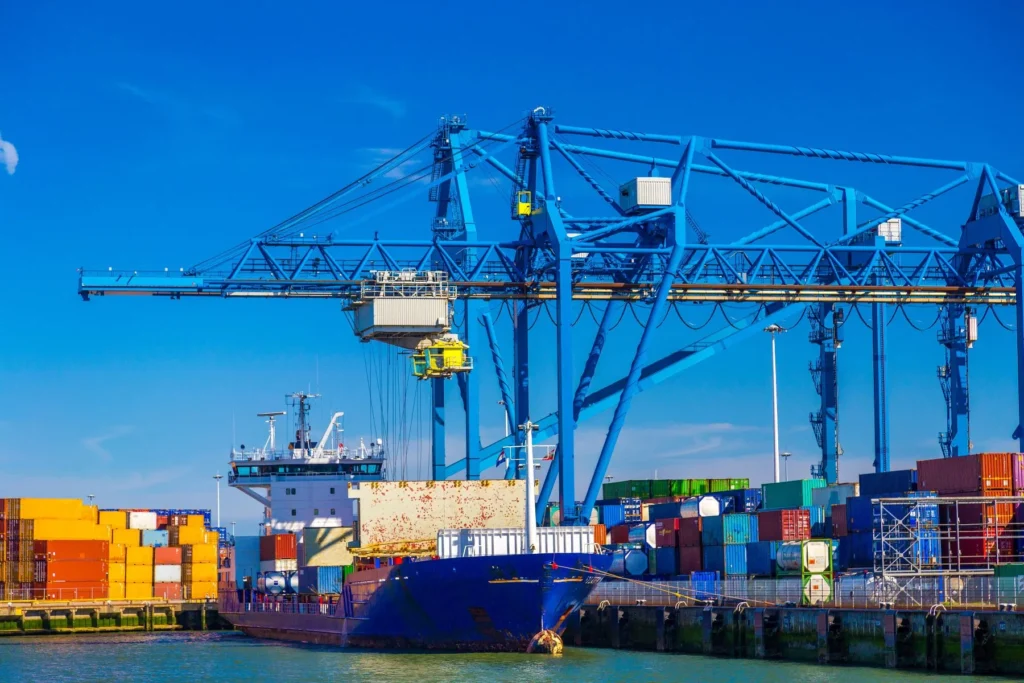
The first half of 2026 shows the traditional giants are holding volume but barely growing, while a handful of secondary ports are pulling ahead. For Australian exporters and importers, that split is starting to influence transit times, equipment availability, and which gateways make sense for different lanes.
Data from major port authorities and industry reports show…
Rotterdam (Netherlands)
212.0 million tonnes total cargo in H1 2026
+0.4% year on year
Containers essentially flat: −0.1% in TEU
Antwerp‑Bruges (Belgium)
133.9 million tonnes total cargo
−2.4% year on year
Containers down 1.5% in TEU, impacted by strikes and a quay spill
Hamburg (Germany)
56.1 million tonnes total cargo
−3.1% year on year
Containers: 4.0 million TEU, down 3.8%
US flows down 13.5%, liquid bulk down 14%
Bremerhaven (Germany)
34.5 million tonnes total cargo
+5.9% year on year
Containers: 2.6 million TEU, up 5.7%
Algeciras (Spain)
Containers around 2.4 million TEU in H1
+3% year on year in TEU, despite a slight dip in total tonnage
Gdańsk (Poland)
Highlighted in regional reports as a growth port in H1 2026
Container throughput near 2.8 million TEU, with strong year‑on‑year gains
What’s Driving the 2026 Split?
1. Big Gateways Are Flat to Slightly Down
Rotterdam and Antwerp‑Bruges together still handle a huge share of Europe’s seaborne trade, but H1 2026 shows…
Rotterdam: volume flat
Antwerp‑Bruges: down on both total cargo and containers
That reflects a mix of softer demand on some trades, operational disruptions (strikes, incidents), and carriers rebalancing services across a wider set of ports.
2. German Ports Are Diverging
Hamburg’s −3.1% total cargo and −3.8% container drop in H1 2026 contrast sharply with Bremerhaven’s +5.9% total cargo and +5.7% container growth.
3. Southern and Eastern Gateways Gaining Ground
Ports like Algeciras, Valencia, Gdańsk are seeing steady or rising container volumes even as some northern hubs stall.
This trend is amplified by geopolitical disruptions (Middle East tensions, Red Sea rerouting), which have pushed carriers to test alternatives.
For Australian Shippers, it is recommended that you revisit your primary European gateway if your European discharge has been…
~ Rotterdam, it is still a solid core gateway, but don’t assume it’s the fastest or cheapest option for every inland destination.
~ Antwerp‑Bruges, is strong for Benelux, northern France, and western Germany, but factor in recent labour and operational disruptions when planning time‑critical cargo.
~ Hamburg, if you’re seeing longer dwell times or fewer direct calls, consider testing Bremerhaven or even Wilhelmshaven (which saw very strong container growth in H1 2026) for German and Central European lanes.
Regularly reviewing port pair options can uncover faster or more reliable routings that weren’t optimal 12–24 months ago.
📸 and reference https://trans.info/en/european-ports-h1-2026-497216