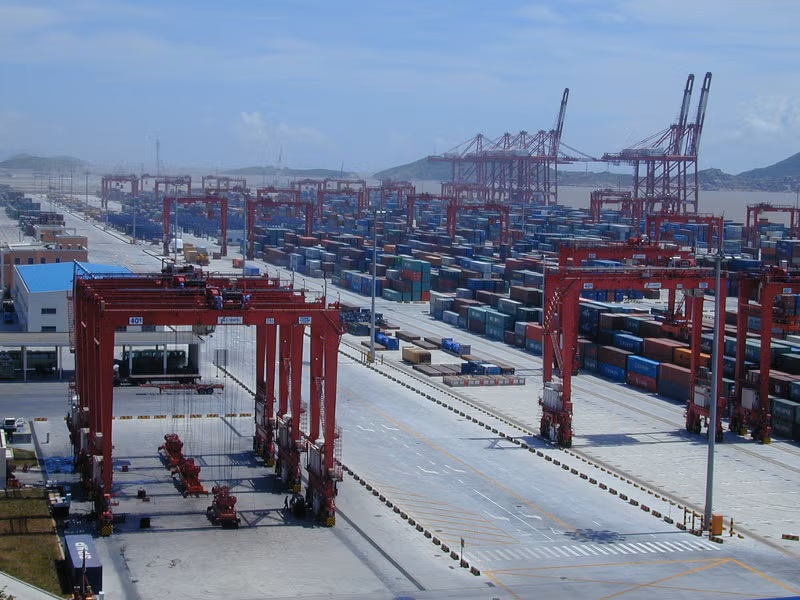
On Saturday 1st August 2026, the Port of Shanghai did something no container port has ever done: it moved 203,881 TEU in a single day, becoming the first port in the world to break the 200,000 TEU daily barrier.
The figure was confirmed by Shanghai International Port (Group) Co., Ltd (SIPG).
What makes this record more remarkable is the context. In mid-July, Typhoon Bavi disrupted vessel operations at Shanghai for roughly four days, forcing trunk and feeder ships to shelter offshore. When they all converged on the port at once, it created a serious backlog; tighter berth availability, congested yards, and pressure on vessel clearance and turnover.
Rather than triggering prolonged congestion, SIPG coordinated resources and pushed through a recovery phase that held throughput at a stable 172,000 TEU per day, before operational efficiency climbed further and culminated in the new single-day record. Zhao Nan of the Shanghai International Shipping Research Center called it evidence of the port’s “intelligent management, coordinated scheduling and infrastructure support” in the face of disruption.
This is the third time Shanghai has broken its own single-day record in just over a year.
Under Shanghai’s newly released 15th Five-Year Plan (2026–30), the port is targeting annual container throughput above 58 million TEUs by 2030.
For those of us moving cargo through or connected to Chinese origin ports, a record like this cuts two ways:
Absorbing a typhoon-driven vessel backlog and still setting a global record within weeks shows Shanghai’s berth planning, crane productivity and yard coordination can flex under real stress, a reassuring sign for carriers and shippers relying on schedule integrity.
Record days can create downstream pressure. Industry analysts flag that a surge of this scale tests the landside network just as hard as the terminal; trucking, rail, barge links, empty container repositioning and yard dwell time all absorb the shock after the cranes finish. Forwarders booking space through Shanghai in the following weeks should watch for knock-on effects in feeder schedules, gate appointment windows and inland haulage capacity.
📸 and reference https://www.ship-technology.com/projects/portofshnaghai/